A calm down corner is a designated, quiet place where a child can pause when they feel overwhelmed, angry, or frustrated and use simple tools to regulate. It is not a punishment chair or a place to “think about what you did.” Done well, it gives your child a repeatable path back to the group: notice the feeling, choose a strategy, settle the body, and return when ready.
What a calm down corner is—and what it is not
A calm down corner, sometimes called a calm down area, combines three things: a defined space, a small set of sensory tools, and clear expectations. Occupational therapy practice uses calming corners as a sensory-integration support. The aim is agency: a child has choices and learns what helps, rather than being isolated for having a hard moment.
That distinction matters. A time-out is consequence-based and separates a child from an activity. A calm down corner is a self-regulation tool. The child can choose it, use a strategy, and rejoin the community. Regulation comes first; any conversation about what happened comes later.
Watch for the small signals before a situation grows: clenched fists, a head dropping down, or refusal to work. At that point, a familiar corner can be a preventive option—not a last-minute response to a crisis. Schools using calming corners report fewer behavior incidents, referrals, and trips to the principal’s office. One report describes reductions in classroom behavior incidents of up to 50 percent, but the corner is not a switch you install. Children need to be shown how every tool works and have chances to practice when calm.
Set up a calm down area in seven practical steps
- Choose a quiet spot. Keep it away from the noisiest part of the room and, in a classroom, within the teacher’s sightline. The child should feel separate from peers without being fully hidden.
- Add one soft place to land. A beanbag, cushion, yoga mat, or other soft seat makes the boundary of the space clear.
- Start with only three to five tools. Too many choices can overwhelm a dysregulated child. You can rotate items later.
- Use a visual timer. A sand timer or digital countdown makes the break predictable. A three- to five-minute window is a useful standard, adjusted for age and need.
- Post short rules. For example: one child at a time; choose a tool; use it safely; return when the timer ends. In a classroom, a timer also helps prevent the space from becoming task avoidance.
- Open the corner together. At home, invite the child to help choose the spot and try the tools. In class, introduce it to everyone, not just after one child has struggled.
- Practice before it is needed. Role-play walking over, selecting a tool, using it, and returning. Modeling is not a one-time explanation; repeat it until the routine is familiar.
A small space is enough. A pop-up tent, a blanket draped over a table, a cardboard screen, or a repurposed closet can create a defined retreat in a tight room. Leave the setup in place for two to three weeks before deciding it does not work. Children may need time to trust a new routine.
Choose calming tools a child can actually use
The best calm down corner ideas are purposeful, not elaborate. Each item should offer a clear next action for a child whose words or attention are hard to access in the moment. Teach each tool explicitly, then keep the collection fresh by rotating it.
| Need in the moment | Tool to offer | How to use it |
|---|---|---|
| A quieter sensory break | Headphones | Use with or without music to reduce sound. |
| Comfort and a clear boundary | Beanbag, cushion, mat, or stuffed animal | Sit, lean, or hold it while settling. |
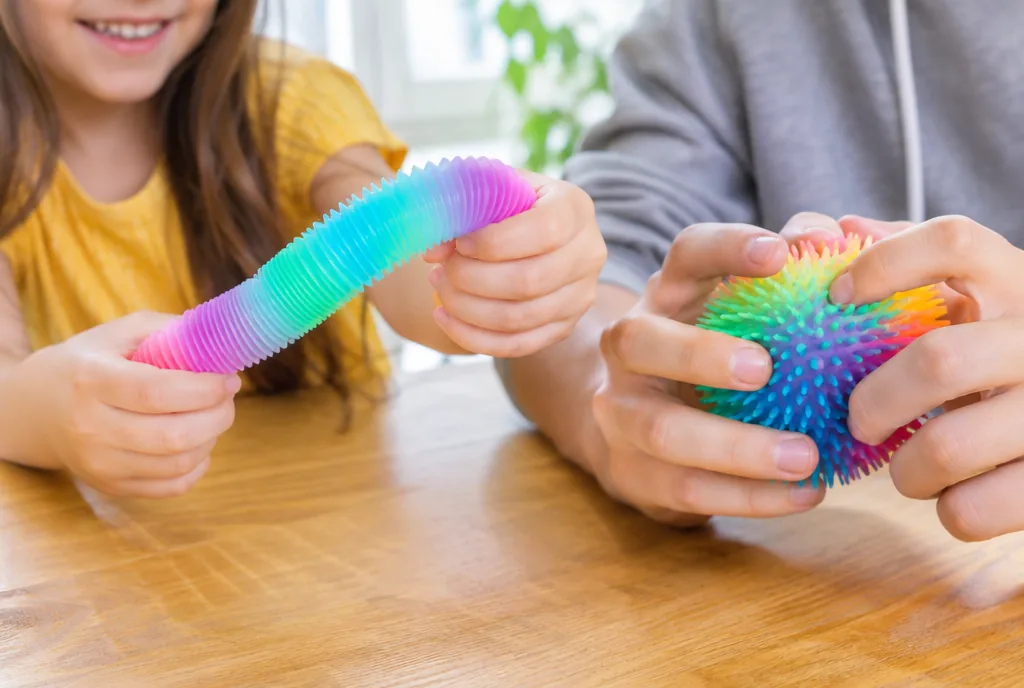
| Something for busy hands | Fidget, tactile object, or chewable sensory tool | Choose one item and use it as taught. |
| A brief focus activity | Glitter jar or sound device | Watch, listen, and let the activity anchor attention. |
| Body-based input | Wall pushes, push/pull work, or a weighted lap pad | Use a brief, taught activity before returning. |
Heavy work such as wall pushes, push-ups, or pulling and pushing boxes uses resistance and pressure to engage the proprioceptive system. It can be a useful option near the corner when sitting still is not the right first step. Picture books about emotions can also help a child process a feeling. Screens are more likely to stimulate than calm, so leave them out.
Weighted lap pads deserve specific limits. They should be no more than 10–15 percent of a child’s body weight and used for no longer than 20 minutes at a time. They are for short-term calming while seated, not for overnight use. If you are unsure whether a weighted item suits your child, or you have concerns about health or safety, ask a doctor first.
Give feelings and breathing a visible next step
In a hard moment, “calm down” is not a strategy. Calm down corner printables can turn it into one. A feelings chart lets a child point to a feeling when words are missing. A feelings wheel expands “mad” or “sad” into more precise states such as disappointed, overwhelmed, or lonely. A support-choices board can ask one practical question: “What can I try?”
Keep breathing cards on a ring or within arm’s reach, not only on a wall poster that may be overlooked. Try a few simple options during calm practice:
- Box breathing: breathe in for four, hold for four, breathe out for four, and hold for four.
- Five-finger breathing: trace the fingers of one hand with a finger of the other hand; breathe in going up each finger and out coming down.
- Lazy 8, star, or triangle breathing: follow the shape slowly with a finger.
- Bumble bee breath: breathe in through the nose, then hum on the exhale. Hands over the ears make the vibration easier to notice.
A homemade glitter jar can become more than decoration when the child helps make it, understands its purpose, and chooses to use it. The Nebraska Department of Education lists a self-made glitter jar among effective calming-corner activities.
Make a calm down corner in the classroom work for everyone
A calm down corner in a classroom is usually compact, teacher-visible, and shared across many children. That means the routine needs to be especially clear: one child at a time, a visual timer, and tools that have been practiced. Introduce the area during a calm class period with role-play. A child can practice noticing a feeling, taking a break, choosing a breathing card, and returning to the lesson.
If a child uses the corner frequently, break cards or tickets can set a reasonable number of independent breaks in a day. If the space becomes a place for throwing items, playing, or refusing to return, reteach the expectations. In an extreme case, it can temporarily require teacher permission. The answer is not to turn it into punishment; it is to make the purpose usable again.
Home offers more flexibility. A home calm down area can be tailored to one child and built together on a quiet day. It may be a bedroom nook, a soft corner, or a spot that includes a favorite stuffed animal. At school, the corner might be a child’s only available retreat; at home, there may be several calming places, such as a bedroom, cozy nook, or yard. In both places, avoid making it a “sit quietly and reflect” corner. The goal is regulation, not a lecture.
Co-regulation helps children borrow your calm
A corner does not mean a child must handle every big feeling alone. Co-regulation means an adult manages their own emotions while helping a child through a difficult moment. Before you approach, take a breath yourself. Then get to the child’s eye level, keep your voice calm, let your body language stay open and relaxed, model one strategy, and leave enough space for the child to respond.
You might say, “I can see this is hard. I’m going to stay nearby. Would you like to choose the breathing card or the headphones?” That is different from, “Go to the calm corner.” The first preserves choice and offers support.
Independence develops in stages. At first, a child may need full co-regulation: an adult stays close and guides every step. Later comes guided self-regulation, then supported self-regulation with check-ins, and finally independent use. A teacher or parent can accompany a child to the corner and breathe with them; sending them there alone as a consequence undercuts the purpose.
Adapt the corner for autistic children without making assumptions
A calming corner for autism should emphasize predictable routines, a defined space, and sensory input that fits the individual child. Autistic children may benefit from knowing exactly where to go, what tools are available, and what happens next. This is not a diagnosis or a one-size-fits-all prescription; observe what helps the child and teach the routine directly.
A pop-up tent, a blanket draped over a table, or a cozy nook under a bed frame can make the physical boundary clear. Noise-reducing headphones may help with sound. Reducing multiple scent sources, using buff-colored paper rather than bright white paper, and offering a short sensory break before overload are other options that sensory guidance recommends. Some children seek deep pressure and may prefer a weighted lap pad or other appropriate support; follow the lap-pad limits above.
Think preventively about “sensory snacks”: short, planned sensory pauses across the day rather than waiting for overload. If you have ongoing concerns about your child’s health, safety, or support needs, talk to a doctor. A calm down corner can support regulation, but it does not replace individualized professional care.
Clear up the myths that turn support into punishment
- Myth: It is a prettier time-out. A time-out isolates and follows a consequence. A calm down corner teaches regulation and preserves choice.
- Myth: You should send a child there. Ordering “Go to the calm corner!” can make the space feel punitive. Invite, model, and accompany when needed.
- Myth: More sensory tools are better. An overflowing corner can add stimulation. Begin with three to five taught tools.
- Myth: The corner should solve behavior by itself. It works best alongside adult co-regulation, practice, and early recognition of distress signals.
- Myth: You only show it during a meltdown. Practice in calm moments so the routine is available when a child needs it.
Frequently Asked Questions
What is a calm down corner?
It is a designated quiet space where a child can choose a brief regulation strategy, such as breathing, a sensory tool, or a feelings chart, before returning to home or classroom activities. It is not a time-out.
Do calm down corners work?
They can help when children are taught how to use the tools and adults notice early signs of dysregulation. Schools using them report fewer behavior incidents; one report describes reductions of up to 50 percent. The setup alone is not enough—practice and adult support matter.
What should I put in a calm down corner?
Start with soft seating, a visual timer, and three to five purposeful tools such as headphones, a fidget, tactile objects, a stuffed animal, breathing cards, or a feelings chart. Add items only after you have taught how to use them.
How do you set up a calm down corner in a classroom?
Choose a quiet, teacher-visible spot, limit the tools, post simple rules, and use a visual timer. Introduce it to the whole class and role-play the routine. Keep it for one child at a time and reteach expectations if it becomes play or task avoidance.
What is a calming corner for autism?
It is a predictable, defined space with sensory supports that fit an individual autistic child. A tent or under-table nook, noise-reducing headphones, fewer scents, and planned sensory breaks can be useful. See a doctor when you have concerns about health, safety, or support needs.