The W-sitting position is common enough to stop many parents mid-play: a child sits on the floor with bent knees and feet tucked outside the hips, making a W shape when viewed from above. It can look dramatic, but the best response is usually curiosity rather than alarm. Occasional W-sitting is not, by itself, evidence of a hip problem or a diagnosis. What matters is how often your child uses it, whether they can comfortably choose other positions, and what else you notice during play and movement.
What the W-sitting position looks like during floor play
In W-sitting, your child’s bottom stays on the floor, the knees point forward, and the lower legs sweep back and out to either side. You may also hear it called reverse tailor sitting or frog sitting. The position puts the hips into a large amount of internal rotation.
Toddlers and preschoolers often discover W-sitting when they begin sitting and playing independently on the floor. It creates a wide, steady base, so a child can stay upright while building a block tower or studying a puzzle without working as hard to stabilize the trunk. That convenience is exactly why it can become a favorite position for a child whose core strength is still developing.
Seeing the position once—or even regularly during a busy week of play—does not tell you everything about your child’s body. Watch the bigger picture instead. Can they shift to another position when a toy is placed to the side? Do they rotate their trunk, reach across the middle of the body, and move in and out of sitting comfortably? Those observations are more useful than treating one posture as a verdict.
Is W-sitting harmful? The research is more reassuring than the warnings
W-sitting has collected a lot of scary claims online. The available research does not support the idea that the position itself causes hip dysplasia. A 2024 systematic review searched 3,641 articles and included seven studies in its analysis. Its conclusion was that there was no scientific evidence against W-sitting in children and no association with hip dysplasia.
A Children’s Hospital Los Angeles survey also found no increased risk of developmental dysplasia of the hip among children whose parents reported W-sitting. In that group, 46% of parents said their child currently W-sat or had done so in the past. That is a useful reminder that this is a familiar childhood posture, not a rare warning sign.
At the same time, “not proven harmful” does not mean every child should spend every floor-play session in one fixed posture. Some clinical guidance, such as from the Cleveland Clinic, cautions that frequent, prolonged W-sitting may affect joint health, muscle development, and coordination because it loads a child’s soft, flexible bones and joints in an unusual direction. NHS guidance also notes that W-sitting itself does not hurt, though extended use can make inward-turning feet, called intoeing, look more noticeable.
A practical middle ground is to avoid panic and avoid policing. Let your child play, while making it easy and appealing to move through several positions. Variety gives the body chances to shift weight, rotate, balance, and change plans.
Why W-sitting can be a useful clue, not a diagnosis
W-sitting is sometimes called a red flag because it can hide a challenge rather than cause one. Its broad base gives the torso so much support that a child may not need as much active core strength to stay upright. In this position, turning the trunk or reaching far across the body can also be harder. Those movements help children practice balance, crossing movements, and, later on, handwriting.
This does not mean that every W-sitter has weak core muscles. It means the position can be one observation worth putting beside others. A child with low muscle tone, sensory-seeking behavior, or hypermobility may prefer the extra stability it offers. Children with hypermobility have unusually flexible joints and may also have difficulty with posture and core strength. Neither low muscle tone nor hypermobility can be identified from a sitting position.
Autism belongs in the same careful category. W-sitting is observed in some children with autism, often alongside lower muscle tone, less trunk control, or a weaker core. There is correlation, not a proven cause-and-effect relationship, and many neurotypical children W-sit. It is not a screening test for autism or any other condition.
Age and hip rotation explain why many children outgrow W-sitting
W-sitting is especially common between ages 2 and 5. Many children naturally use it less as their strength, coordination, and preferred ways of playing change. If it remains the strongly preferred, long-duration position beyond roughly ages 5 to 6, it is reasonable to pay closer attention—not because an age cutoff makes the posture dangerous, but because it is useful to see whether your child has other comfortable options.
Hip shape and rotation also matter. Femoral anteversion, an inward twist of the thighbone, is the most common cause of intoeing in children ages 3 to 10. The average angle is about 40 degrees at birth and decreases to about 15 degrees at skeletal maturity. It is usually most pronounced between ages 4 and 7 and resolves in 80% of children by age 8. In most children, intoeing resolves on its own by ages 8 to 10, usually without treatment.
That natural change helps explain why a young child may find the hip internal rotation of W-sitting easy and later lose the habit. Children with femoral anteversion can still participate in sports just as well and do not have a higher risk of future back problems, hip problems, or arthritis because of it.
Help your child shift positions without turning play into a correction
Your goal is not to ban W-sitting or enforce one “correct” pose. It is to expand your child’s movement menu. A calm cue such as “Feet forward” may be all that is needed. Better still, sit nearby and model the new position yourself. Sudden restrictions and pulling a child out of the position can turn a simple habit into a struggle.
- Offer a choice at floor time. Try, “Want to sit criss-cross or with your legs long?” A choice gives your child a way to succeed immediately.
- Change the play setup. Put a few favorite pieces slightly to the right, left, and in front of your child. Reaching for them invites trunk rotation and a natural position change without interrupting the game.
- Use short movement breaks. A few moments of crawling, bear walks, or other animal walks can make floor play more active and ask the trunk to work in a different way.
- Practice often, not perfectly. A brief gentle reminder over many play sessions is more useful than demanding that a child hold a difficult new position for a long time.
If your child slips back into W-sitting, it is not a failure. Notice whether a different position works better with a small change: a toy closer to the body, a wall nearby for support, or a shorter turn on the floor before a movement break.
Alternative sitting positions give the body more ways to play
Different positions offer different movement challenges. Rotate through them rather than replacing W-sitting with one new rule. Side sitting should be practiced on both sides so one pattern does not become the only pattern.
| Position | How it looks | What it invites during play |
|---|---|---|
| W-sitting | Knees forward, feet outside the hips | A very wide, stable base with less demand for active trunk stability |
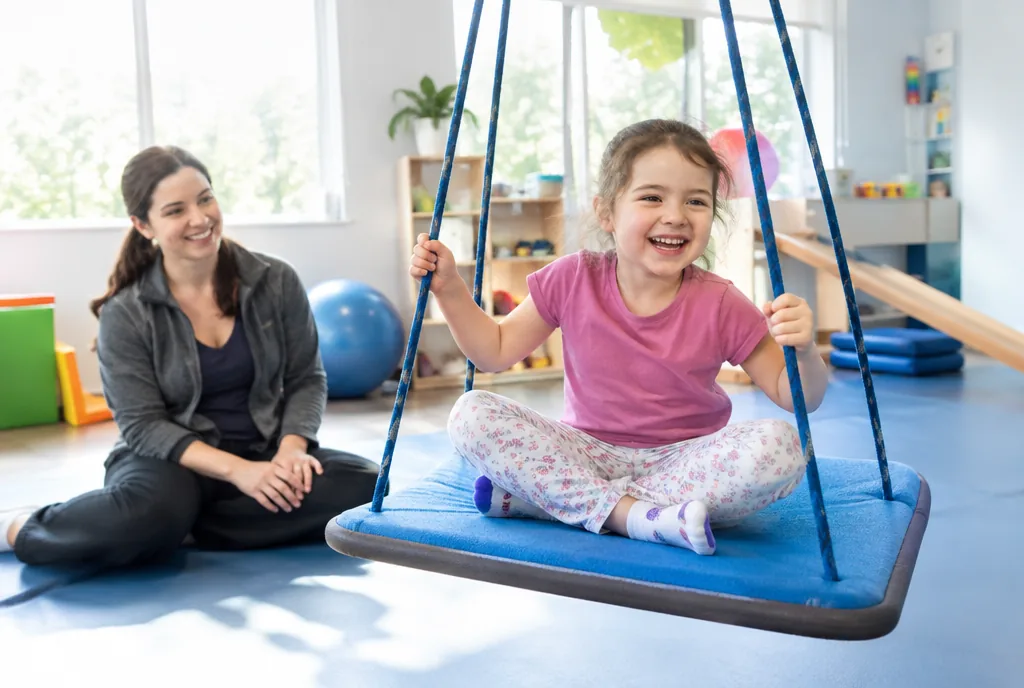
| Criss-cross | Legs crossed with knees bent | Active balance, trunk rotation, and reaching |
| Side sitting | Both bent legs rest on one side | Weight shifting and arm support; alternate sides |
| Long sitting | Legs straight out in front | Upright trunk control, hamstring stretch, rotation, and crossing movements |
Criss-cross, sometimes called tailor sitting or pretzel pose, asks the body to make small balance adjustments. In side sitting, both legs rest on the same side of the body; switching sides matters. Long sitting, also called the letter L position, has a narrower base and can be more demanding for a child who tends to fall backward.
Heel sitting, tall kneel, and half kneel are useful options too. Think of them as changing stations in play, not drills. For example, your child might build in criss-cross, kneel to place a tall block, then sit long-legged to roll a ball back and forth.
Common W-sitting myths can make a normal habit sound scarier than it is
Myth: W-sitting causes hip dysplasia
The 2024 systematic review found no scientific evidence against W-sitting and no link with hip dysplasia. A posture may be worth discussing in context, but it is not established as a cause of dysplasia.
Myth: W-sitting means a child has autism
It does not. Some children with autism W-sit, and many children without autism do too. The position alone cannot identify a developmental condition.
Myth: Every child must stop by one exact birthday
There is no universal deadline. W-sitting is common from 2 to 5, and many children move away from it naturally. A persistent preference after age 5 or 6 is a reason to observe skills and comfort, not to assume harm.
Myth: Constant correction is the solution
Frequent scolding can make floor play stressful. Modeling alternatives, offering a simple cue, and building movement into play are more constructive ways to encourage change.
Frequently Asked Questions
What is the W-sitting position?
It is a floor-sitting posture in which a child sits on their bottom with bent knees forward and feet placed outside the hips, forming a W shape from above. The hips are in substantial internal rotation.
Is W-sitting harmful?
Occasional W-sitting is not shown to be harmful. A 2024 systematic review found no scientific evidence against it and no association with hip dysplasia. Frequent, long periods in one position are still a good reason to encourage movement variety.
Why is W-sitting considered a red flag?
It can be a clue that a child prefers extra stability because core strength, balance, or posture control is still developing. It is a clue to consider with other observations, not a diagnosis.
Is W-sitting associated with autism?
It is seen in some children with autism, but there is no proven cause-and-effect link. Many neurotypical children also W-sit, so this posture cannot diagnose autism.
At what age should W-sitting stop?
It is common between ages 2 and 5, and many children naturally outgrow it. If it is still the preferred long-duration position after about age 5 or 6, encourage alternatives and consider the child’s overall movement skills.
When should you see a doctor about W-sitting?
Talk with your pediatrician if the habit does not ease after months of gentle position changes, or if your child cannot sit upright on the floor. Seek an evaluation for one-sided intoeing, a limp, persistent or unusual leg pain, hip stiffness, or a sudden change in gait. Pediatric physical therapy can create an individual plan using strengthening, alternative positions, and simple changes to the play environment.