Brain breaks for the classroom are short, structured pauses that use movement, mindfulness, or sensory activities to help students return to learning with more focus. The most useful break is not a random interruption: it matches the moment. A class that is restless may need a brief movement break; a class coming in from a noisy transition may need a quiet reset. With a timer, a clear start and stop, and one simple activity, you can make a few minutes work harder for the next stretch of instruction.
Why brain breaks for the classroom help students reset
A brain break is usually a one- to five-minute pause built around movement, mindfulness, or a sensory activity. Its purpose is to support focus, attention, and learning, not to fill spare time. Movement increases blood flow to the brain and can improve focus and attention. Breaks also give the brain time to compress and reinforce memories from practice.
The research gives a practical reason to protect those pauses. In one study, students learned vocabulary 20% faster after physical activity. A 2016 study of Danish students ages 8 to 15 found that test performance fell by 0.9% of a standard deviation with each later hour of the day. A break improved test scores by 1.7% of a standard deviation, removed the negative time-of-day effect, and lifted performance above the baseline. Students who were performing at the lower end benefited most, improving by 2.7% of a standard deviation; the highest-performing students showed no effect.
That does not mean every pause produces the same result. A 2021 meta-analysis found positive acute and longer-term effects of active breaks on attention, particularly selective attention, although most findings were not statistically significant. A review of 17 studies found that classroom movement breaks can improve on-task behavior and increase physical activity. A 2023 meta-analysis of 28 studies found a small, positive effect on academic performance. Treat brain breaks as a useful classroom routine, not a guarantee or a replacement for responsive teaching.
Plan the right movement break before attention drops
The best timing is proactive. Plan a pause before fatigue, boredom, or inattention takes over, rather than waiting for students to reach a breaking point. For elementary students, neurologist and teacher Judy Willis recommends 10 to 15 minutes of focused learning followed by a three- to five-minute break. For middle and high school students, she recommends 20 to 30 focused minutes followed by three to five minutes off the task.
Shorter resets can also have a place. In a 2025 study with university students, 90-second microbreaks every 10 minutes were associated with significantly higher test performance: 65.1% compared with 56.4%. Across the day, multiple 10-minute breaks are more effective than one 30-minute break for cognition, reading comprehension, and productivity. Build a predictable rhythm, then choose the activity from what students need at that point in the lesson.
| What you notice | What to try | Suggested length |
|---|---|---|
| Students have been in focused elementary work | A movement, mindfulness, or sensory reset | Three to five minutes after 10 to 15 focused minutes |
| Students have been in focused secondary work | A choice-based movement or quiet reset | Three to five minutes after 20 to 30 focused minutes |
| A short transition is needed | Box breathing, Quiet Minute, or a 90-second microbreak | About 90 seconds to a few minutes |
| The class needs sustained physical activity | A whole-body movement break with warm-up and cool-down | Ten minutes |
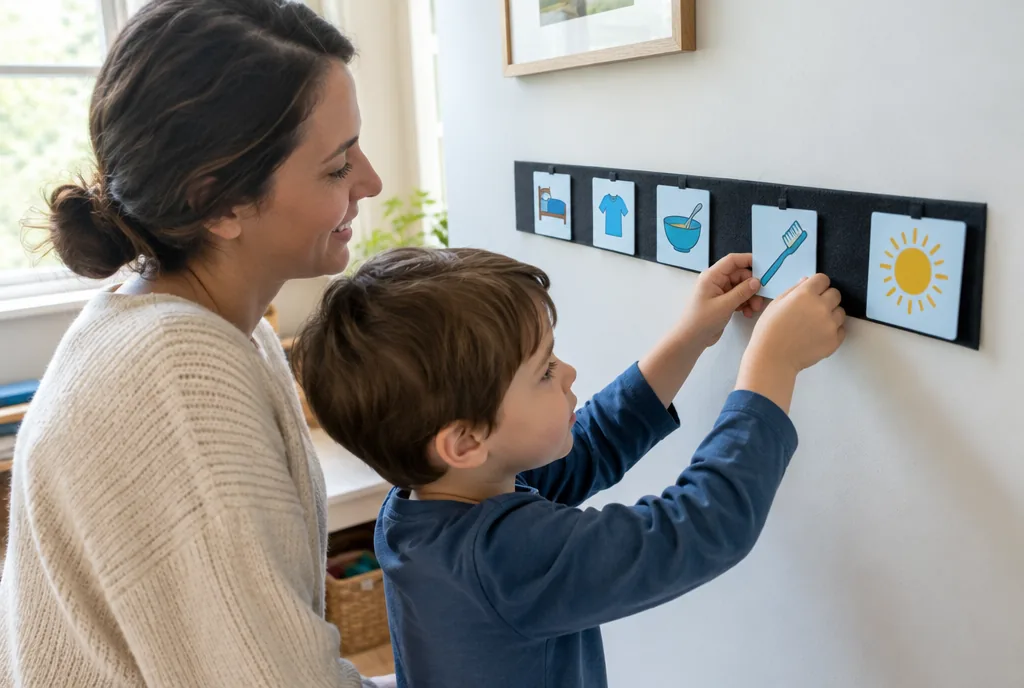
Keep the directions visible or repeatable: what students do, how long it lasts, and what happens when the timer ends. A routine does not have to be identical every time. It does need a clear return to the lesson so the break supports instruction rather than competing with it.
Movement breaks bring energy back without losing the room
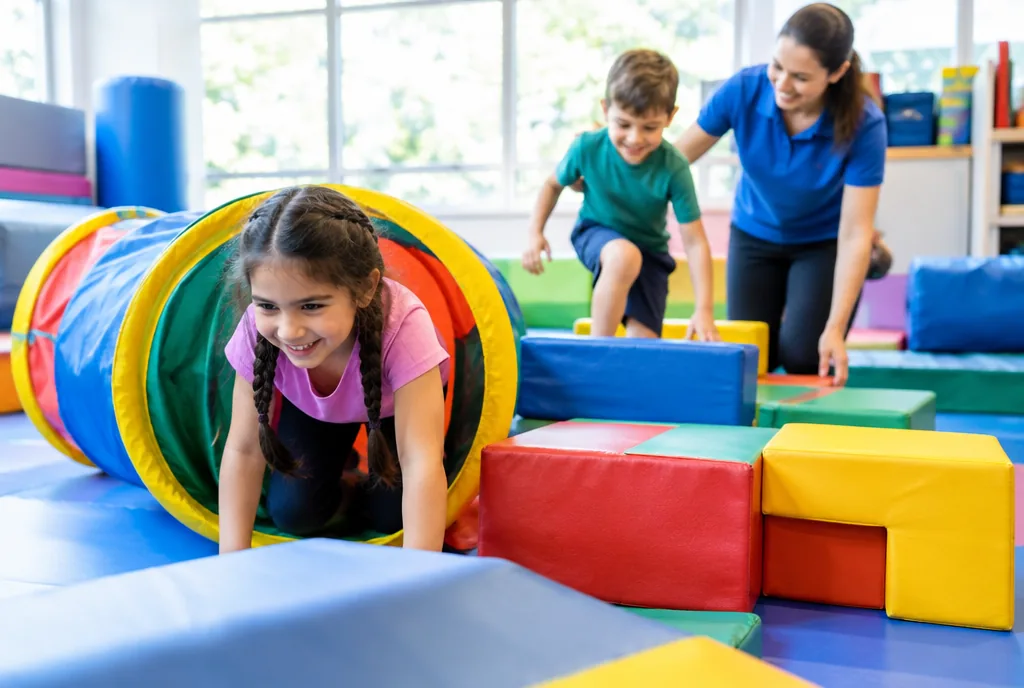
A movement break can be brief or more substantial. One study found that four-minute active breaks improved on-task behavior for elementary students in both morning and afternoon. In another study of fourth- and fifth-graders, on-task behavior was significantly higher after a 10-minute movement break than after a seated condition: 87.6% compared with 77.1%. Five minutes did not produce a significant improvement in that study. A separate study found that a 10-minute whole-body break improved on-task rates for at least 45 minutes afterward.
For a longer movement break, the studied format was straightforward: one to two minutes of warm-up, six to eight minutes of moderate activity, and one to two minutes of cool-down. Across several studies, the average improvement in on-task behavior after movement breaks was about 16.5%. That is a reason to reserve a full 10-minute option for a long block of sitting, not a requirement to make every pause a workout.
Five movement ideas students can start on a cue
- Power Up: Call “Power up!” and invite the class to do 30 seconds of jumping jacks. This is a quick option when students need an alerting burst.
- Atom Game: Students walk around the room. Call out a number, and they form groups of that size. The activity combines movement with peer interaction.
- Would You Rather: Give two choices and have students move to the side of the room that matches their answer. It turns a simple preference into movement and conversation.
- Standing stretch or yoga: Lead a three-minute sequence beside desks, with a seated stretching option. The option matters for students who prefer not to stand.
- Slow marching: Use a slow, rhythmic march when the aim is a calmer transition rather than an energy boost.
Screen-free movement breaks have shown positive effects on focus and engagement. The evidence for screen-based breaks is more mixed, so a no-screen activity is often the simplest default. A video can still be an intentional tool when it fits the age group and the purpose of the pause.
Calming brain breaks for the classroom lower the volume
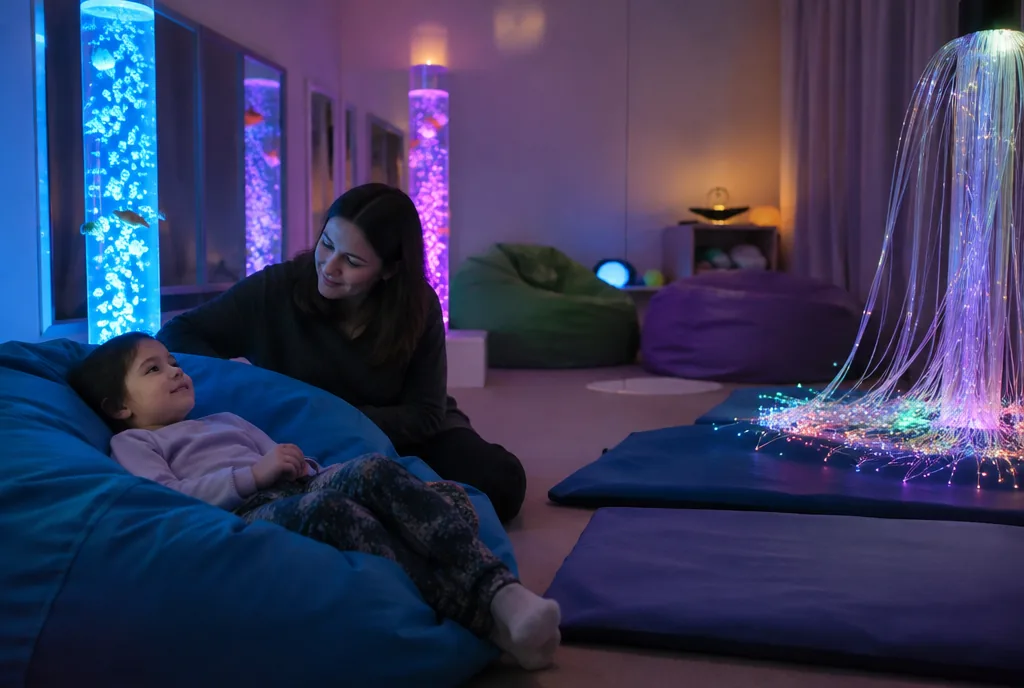
Not every class needs more energy. Calming brain breaks for the classroom use quiet attention, slow rhythm, or sensory input to make the next transition easier. Slow, rhythmic movement such as gentle neck and back stretches, slow marching, or rocking can be calming. Before a test, a 10-minute walking or stretching break can help reduce test anxiety.
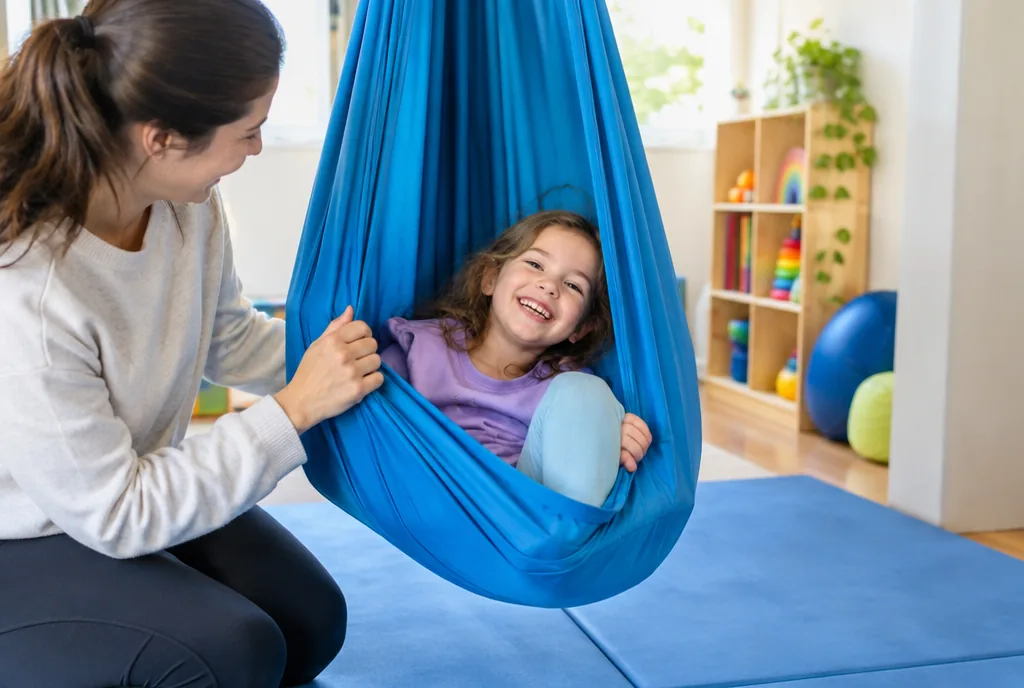
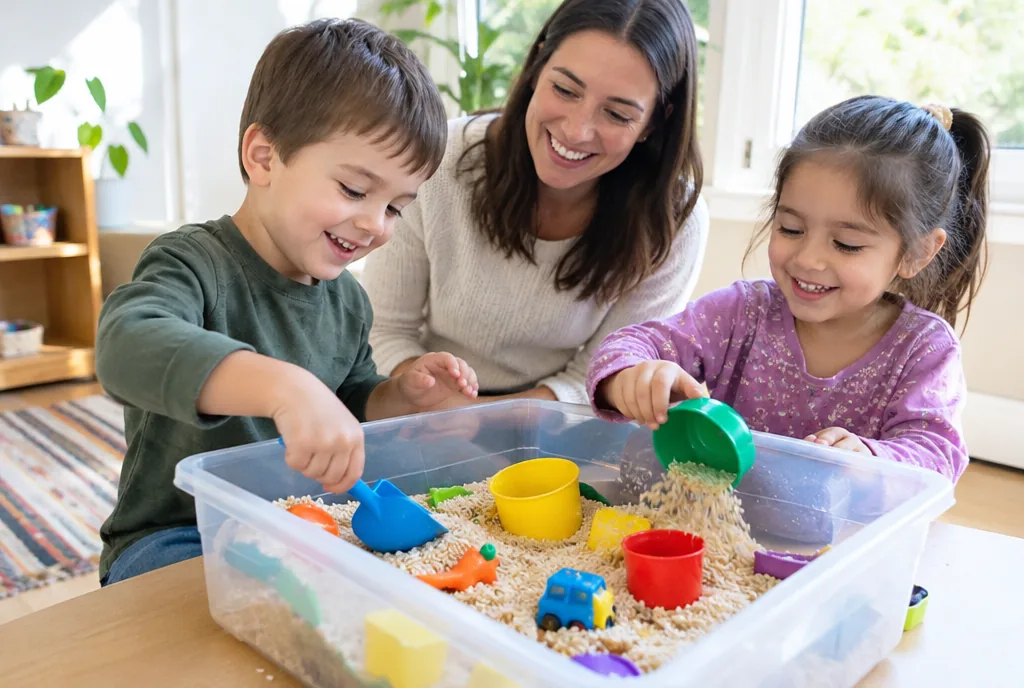
Sensory breaks can focus on three core systems: vestibular input related to movement and balance, proprioceptive input such as heavy muscle work and deep pressure, and tactile input involving touch or pressure. Proprioceptive activities such as carrying, pushing, or pulling can be both calming and alerting, helping children focus. Deep pressure is generally calming to the nervous system and may reduce overload from other sensory systems. Vestibular activity is usually alerting, with an important exception: slow, rhythmic movement can calm.
A short calming sequence for a transition
- Butterfly Hug: Students cross their arms over the chest, placing the left hand on the right shoulder and the right hand on the left shoulder. They take five slow breaths while gently fluttering or tapping the shoulders for one minute.
- Box Breathing: Guide the class to inhale for four seconds, hold for four, exhale for four, and hold empty for four. The four equal steps make this useful for a quiet transition.
- Tense and Relax: Students tense all their muscles for 10 seconds, then release together. Repeat three times.
Present sensory breaks as regular tools for self-regulation, not as a reward or as “time away from work.” A student does not need a label for the class to have a calm, structured option. If a student’s stress or anxiety interferes with daily life or functioning, a parent or caregiver should consult a doctor rather than relying on classroom breaks alone.
Quiet brain breaks protect focus without adding noise
Quiet brain breaks are especially useful after a loud activity, before independent work, or when the class needs a reset without another burst of stimulation. They do not have to be passive. Several quiet activities ask students to notice time, coordinate movement, remember details, or communicate without speaking.
- Silent Ball: Pass a soft ball around the room without talking. A student who drops it sits down. The silence adds a focus and coordination challenge.
- Quiet Minute: Students put their heads down and close their eyes. When they believe one minute has passed, they raise a hand while keeping their eyes closed.
- Fill the Page: Give each student a page and one symbol, such as a circle. For two minutes, they draw the symbol in different sizes in silence.
- Birthday Line-Up: Students line up by birth month and day without talking, using only gestures and fingers to communicate.
- Memory Mime: Each student silently acts out something they did that day while classmates remember the actions they observe.
- Coloring: Quiet, mindful coloring for five to 10 minutes can calm students of every age.
These choices are useful because they have a defined task. Instead of saying “be quiet for a minute,” you give students something specific to focus on. For an older group, the same structure can feel less childish when you explain the purpose, offer a choice, and keep the timer honest.
Quick brain breaks for teenagers preserve choice and dignity
Teenagers need breaks too, but they are more likely to engage when the activity does not feel designed for younger children. Three to five minutes can be enough to recover attention. Peer interaction and choices are particularly important, so give students two reasonable options whenever the space and lesson allow it: move or stretch, work silently or talk briefly, stand or use the seated version.
Good five-minute brain breaks for high school students
- Rest and Reflect: Turn off the lights, set a three- to five-minute timer, play quiet background music, and invite students to close their eyes and take deep breaths.
- Would You Rather: Use an either-or prompt and ask students to walk to the side that represents their answer. It gives a social reset without putting anyone on the spot.
- Snowball Toss: Students anonymously write a concern or question, crumple the paper, and toss it around the room. Each person reads a different snowball aloud.
- Jigsaw Jumble: Small groups assemble puzzle pieces without speaking. The nonverbal rule changes the pace and creates a shared problem to solve.
- Atom Game: Students move through the room until a number is called, then form a group of that size.
Music, laughter, movement, and interaction with peers are among the activities Willis recommends for boosting dopamine. That does not require a performance. A well-run teen break is short, optional in its intensity, and easy to exit. The goal is renewed attention, not forced enthusiasm.
Use GoNoodle deliberately instead of as filler
GoNoodle is an online platform of movement-break videos for children ages 5 to 12, intended to support focus, memory, and engagement. In an evaluation involving 726 teachers, 83% reported improved attention, 66% reported improved memory, and 57% reported improved academic performance. Those are teacher reports, not a promise that every video or class will have the same outcome.
Match the video category to the moment. AirTime is used to calm students before tests. The Maximo is yoga-based for focus. Run With Us is designed to energize. The American Academy of Pediatrics recommends that GoNoodle and other screen-based breaks be used intentionally and developmentally appropriately, not as a filler or distraction. When a non-media alternative can meet the need, prefer it.
That approach keeps the question simple: what does the class need next? If the answer is calm before an assessment, choose a quiet or breathing routine. If the answer is energy before a challenging task, choose movement. The platform is one possible format, not the routine itself.
Common brain-break myths make routines harder
Myth: A brain break is free time
Brain breaks are structured supports for self-regulation. They have an activity, a time limit, and a transition back to learning. Using them as a response to a class that has “earned” a reward makes the routine less predictable and can obscure its purpose.
Myth: Every break should be high-energy
Fast movement can be useful, but slow rhythmic movement, quiet drawing, breathing, or a silent coordination task may fit the classroom better. Choose the input that matches the transition, rather than assuming students always need more stimulation.
Myth: Longer is always better
Three- to five-minute pauses can support attention, and 90-second microbreaks have shown promising test-performance results. A 10-minute movement break may be more appropriate when you want the on-task benefits found in the movement studies. The right length depends on the purpose and the learning block around it.
Frequently Asked Questions
Are brain breaks good for students?
They can be. Research links active breaks with improved attention and on-task behavior, and a meta-analysis found a small positive effect on academic performance. Results vary by activity and context, so use a clear purpose and observe how your students return to learning.
What are some good 5-minute brain breaks for high school students?
Try Rest and Reflect, Would You Rather, Snowball Toss, Jigsaw Jumble, the Atom Game, or a brief standing stretch with a seated option. Each can be kept within three to five minutes and avoids an elementary-school feel.
What are some quick brain breaks for teenagers?
Quick options include 30 seconds of Power Up jumping jacks, a three-minute stretch or yoga sequence, a silent Jigsaw Jumble, or a movement-based Would You Rather vote. Choice and peer interaction help these activities feel appropriate for teens.
Do brain breaks replace instruction?
No. They are brief, structured pauses intended to support focus, self-regulation, and a return to instruction. Plan them before attention fades and use a clear cue for resuming the lesson.
How often should I use brain breaks in class?
For elementary students, a practical guide is three to five minutes after 10 to 15 minutes of focused learning. For middle and high school, use a three- to five-minute break after 20 to 30 minutes. You can also use a 90-second reset during a longer task.