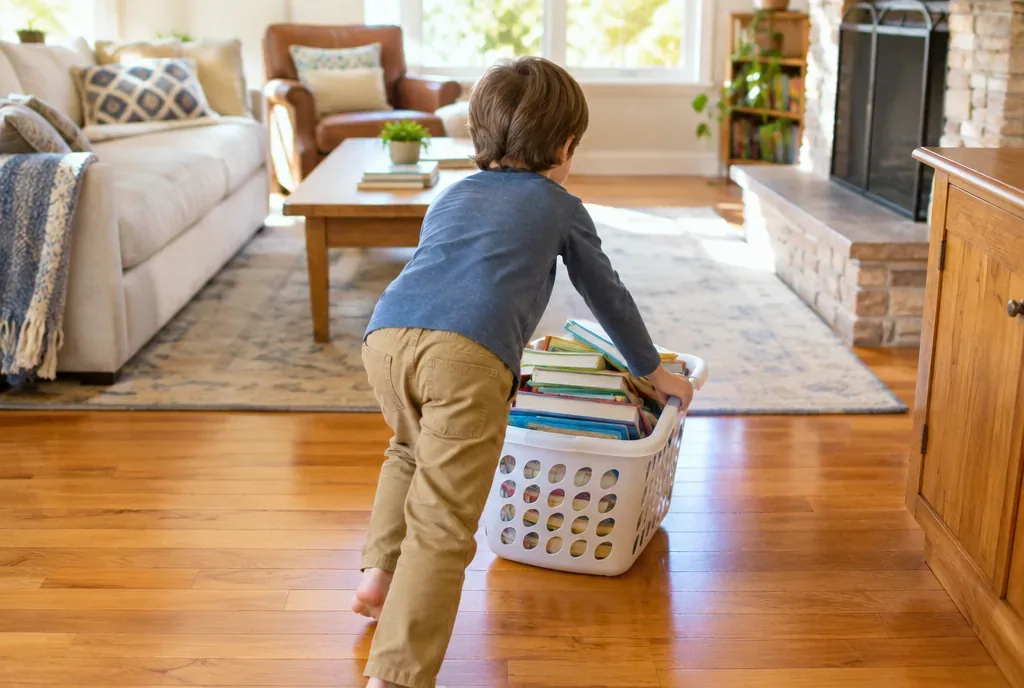
Fine vs gross motor skills comes down to the size and job of the movements your child is practicing. Fine motor skills use the small muscles of the hands and fingers for precise tasks, while gross motor skills use the larger muscles of the arms, legs, and trunk to move the whole body. Both grow through everyday play, and many daily tasks need the two working together.
What is the difference between fine and gross motor skills?
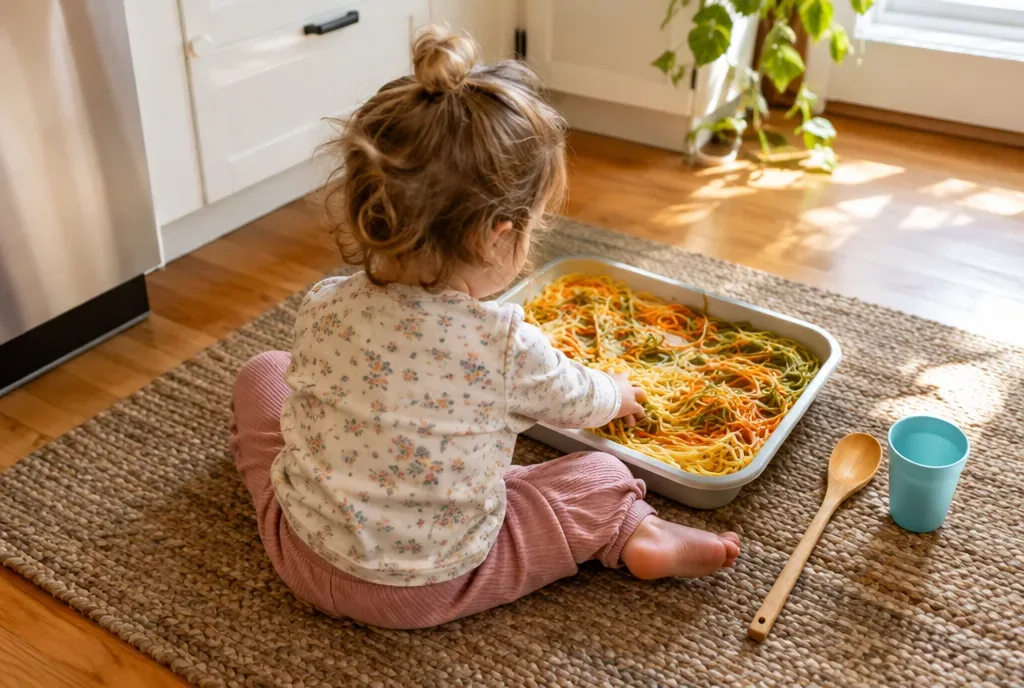
The difference between fine and gross motor skills is not that one matters more. Fine motor control helps a child pick up a tiny object, turn one book page, guide a crayon, or fasten a button. It combines small hand-muscle movements with eye-hand coordination.
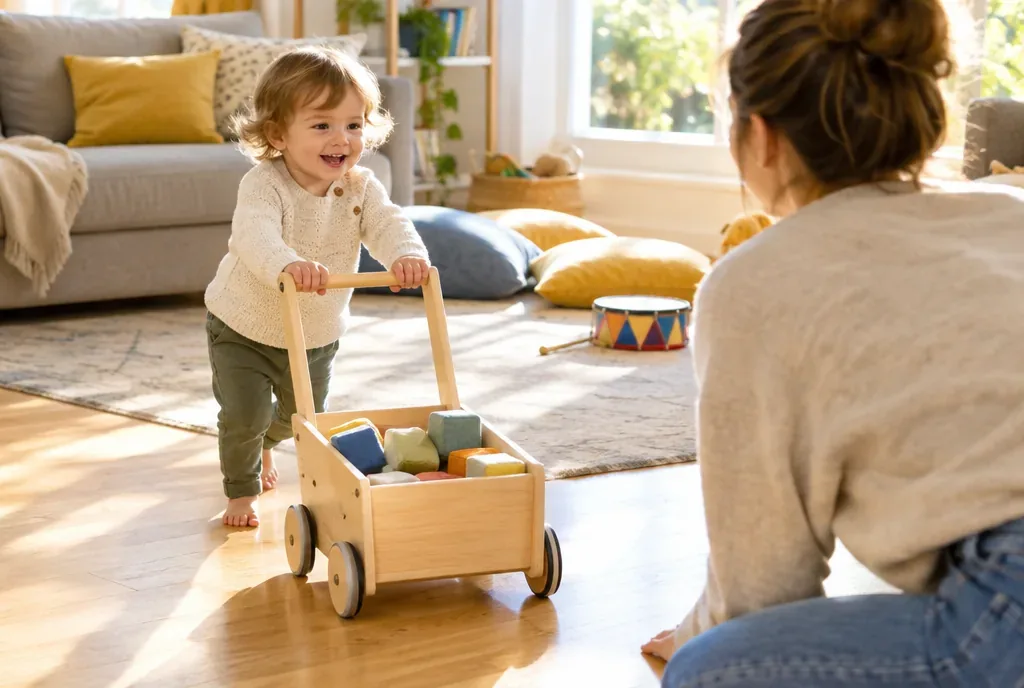
Gross motor skill development involves larger muscle groups and whole-body actions such as rolling, sitting, walking, climbing, and jumping. These movements depend on strength, balance, coordination, and body awareness. The word gross means large here, not unpleasant. Gross motor skills typically develop first: children usually master big movements such as rolling and crawling before refining a pincer grasp.
See fine and gross motor skills side by side
| Fine motor skills | Gross motor skills |
|---|---|
| Picking up a small object with thumb and index finger | Rolling from belly to back or back to belly |
| Drawing, painting, or using scissors | Crawling, walking, running, and jumping |
| Using a spoon or fork | Throwing, catching, or kicking a ball |
| Buttoning clothes or working a zipper | Climbing play equipment or riding a tricycle |
| Stringing beads, fitting puzzles, and stacking blocks | Balancing, swimming, or riding a scooter |
Many activities use both systems. Building a block tower calls for careful hand placement; squatting to retrieve a fallen block and staying steady while reaching use gross motor control. That overlap is one reason play can be such useful practice.
Motor milestones show a sequence, not a race
Developmental milestones are useful signposts, not a scorecard. In the first two months, a baby may lift their head during tummy time while their hands close into a firm grasp. At six to eight months, many babies sit without support, crawl on hands and knees, transfer objects between hands, and use a raking grasp for small items.
Between nine and 12 months, a pincer grasp can emerge and a child may stand briefly alone. By age 2, common motor milestones include running more securely, kicking a ball forward, jumping with both feet, turning board-book pages one at a time, and copying a circle. At age 3, a child may pedal a tricycle, go up stairs with alternating feet, cut along a line, and manage large buttons. By age 5, hopping on one foot, catching a ball with both hands, tying shoes, and writing individual letters are examples of developing control.
Build skill through play, not pressure
Offer a short, repeatable activity and let your child set the pace. For fine motor practice, squeeze and roll therapy putty or Play-Doh, string beads, use child-safe scissors on wide straight lines, move small objects with tongs, or pour water between cups. Drawing with different crayon sizes and connecting or separating building bricks also invite precise movements and hand strength.
For gross motor practice, make a simple obstacle course with cushions, tunnels, and a safe balance path. Try animal walks: a bear walk uses arms and legs, a crab walk challenges the trunk, and frog jumps add a powerful two-foot takeoff. Ball games, hopscotch, dancing to movement songs, and “Simon Says” give children a clear reason to run, stop, balance, throw, or reach.
Choose toys that give hands a real job
The best toys for fine motor skills make children grasp, release, align, twist, or squeeze. Stacking cups and towers suit early grasping and releasing. Shape sorters and inset puzzles ask toddlers to place pieces precisely. For ages 2 to 4, lacing boards and large beads build two-handed coordination, while jumbo tweezers offer pincer-grasp practice.
Construction toys that snap together require a child to line up pieces and judge force. Therapy putty comes in different resistance levels and can be useful for targeted hand-strength work when recommended by an occupational therapist. Child-safe scissors can progress from paper to Play-Doh or straws as control improves. Keep small objects away from children who may mouth them, and choose activities that match your child’s abilities.
Common myths can make practice harder
Myth: Fine skills are only about handwriting
Writing is one example, but self-care tasks matter too. Using utensils, turning pages, zipping a coat, tying shoes, and buttoning clothing all use hands and fingers in daily life.
Myth: Bigger movement is easier and needs no practice
Gross movement asks the body to organize strength, balance, and coordination at once. A child learning to jump, catch, or climb is doing complex work, even when it looks like simple play.
Myth: A missed milestone tells you exactly what is wrong
Milestones can flag a reason to check in, but they do not diagnose a cause. Low muscle tone, premature birth, genetic conditions, cerebral palsy, and differences associated with autism or ADHD can be linked with motor delays. A pediatrician can assess the full picture.
Know when to talk with a pediatrician
Seek medical guidance promptly if your child loses a motor skill they had already gained. Also contact a pediatrician if a baby cannot roll from back to belly by 5 months, cannot sit independently by 7 months, is not pulling to stand or cruising by 12 months, has no independent steps by 15 months, or is not walking independently across different surfaces by 18 months.
Frequent falls, avoiding playground activities, unusual clumsiness, ongoing trouble holding crayons, or strong frustration with age-appropriate hand tasks are also worth discussing. Developmental screening is part of well-child care; the American Academy of Pediatrics recommends structured screening at 9, 18, 30, and 48 months. Early questions are useful information for your child’s care team, not a label.
Frequently Asked Questions
What causes delays in fine motor skills?
Possible contributors include low muscle tone, premature birth, genetic syndromes, cerebral palsy, and motor differences associated with autism or ADHD. Limited experience with crayons, paint, and scissors is also discussed as a possible factor in preschool fine motor development. Only a clinician can evaluate an individual child.
What are gross motor skills, and how do they develop?
Gross motor skills are whole-body movements using large muscle groups in the trunk, arms, and legs. They develop from early actions such as head lifting and rolling toward sitting, crawling, standing, walking, running, and more coordinated activities such as jumping and ball play.
Can you give me examples of fine motor skills?
Examples include picking up small objects with a pincer grasp, drawing, using scissors, stacking blocks, fitting puzzle pieces, turning pages, using utensils, and fastening a button or zipper.
What activities can help develop fine and gross motor skills?
For hands, try putty, beads, tongs, pouring, drawing, and building toys. For larger movements, use obstacle courses, animal walks, dance, hopscotch, and ball games. Choose one enjoyable challenge at a time and repeat it often.
When should parents seek help for motor skill delays?
Talk with a pediatrician when a milestone concern persists, when a child has the specific red flags above, or whenever a skill is lost. A pediatrician can decide whether further evaluation or occupational therapy is appropriate.