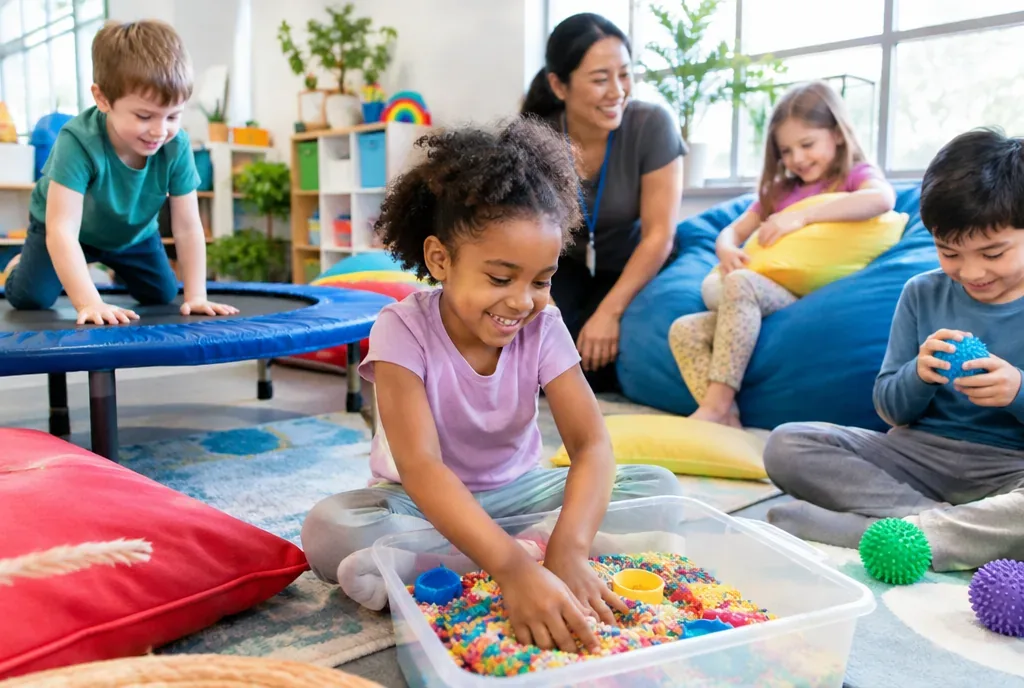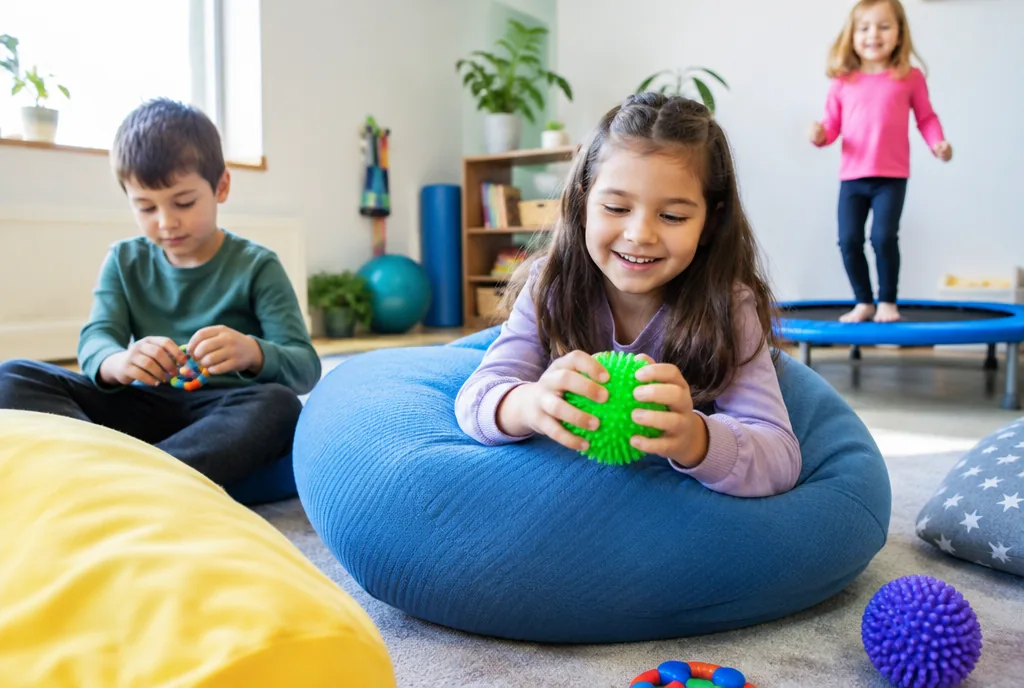
Sensory activities for 1 year olds can be wonderfully simple: a tray of thick yogurt, a wet sponge outside, or a towel hiding a familiar toy. The best setup gives your toddler one interesting thing to explore while you stay close, name what they notice, and let the activity end before it becomes too much. Start with an idea that matches how your child already likes to play.
25 sensory activities for 1 year olds to try today
Choose one or two ideas rather than setting out a full sensory bin. For a child who still explores with their mouth, begin with the edible options and stay within reach.
- Yogurt finger painting: Spread thick plain yogurt on a baking or highchair tray for smearing and tasting; it suits ages 6–18 months.
- Rainbow spaghetti: Cook pasta, toss it with oil, then color batches with food coloring. This works from 12 months.
- Jello dig: Set flavored gelatin in a dish and bury large plastic items for a 9–24-month-old to uncover.
- Frozen toy rescue: Freeze safe toys in a shallow container overnight; offer the ice with a cup of warm water and a wooden spoon.
- Sealed sensory bottle: Half-fill an empty water bottle with water, add food coloring and vegetable oil, then seal the cap tightly with hot glue or strong tape.
- Textured walking path: Walk together over bubble wrap, fleece, foil, and sandpaper laid across the floor.
- Bubble-wrap stomp: Tape a large sheet to the floor, hold hands, and listen and feel as your toddler steps.
- Oat tray: Put dry oats in a shallow tray with a wooden spoon and cup for scooping and dumping.
- Squishy sponge play: Let your child squeeze soaking-wet sponges outdoors.
- Hide and search: Cover baby-safe objects with a towel or blanket and invite your child to find them.
- Oatmeal mud kitchen: Cool cooked oatmeal and add spoons and cups for pretend construction play.
- Chickpea foam: Whisk the liquid from two cans of chickpeas with 1 teaspoon cream of tartar and food coloring.
- Chia gel: Chill 1/4 cup chia seeds mixed with 1.5 cups water and food coloring overnight.
- Bag painting: Seal small amounts of paint and paper inside a clear plastic bag for squishing and poking.
- Leaf collector: Bring a small basket on a walk to gather leaves.
- Dishpan water play: Add plastic cups, spoons, bowls, and a funnel to a dishpan of water.
- Frozen fruit cubes: Freeze berries or melon chunks in ice cubes to scoop, watch melt, and taste; this works from 8 months.
- Freeze dance: Dance while music plays, then stop when it stops.
- Cushion stepping path: Use couch cushions as uneven stepping stones for an early walker.
- Three-fabric touch tray: Offer three different fabrics to a child playing from a stable seated position.
- Water-and-ice tray: Explore a tray with water and ice from a seated position.
- Dry rice tray: Offer a small, closely supervised tray of rice with a cup and spoon.
- Crushed-cereal sand: Use crushed cereal as a dry, pantry-based texture in a tray.
- Cornmeal tray: Put cornmeal in a shallow container for fingers, a spoon, and a cup.
- Gel sensory bag: Seal gel in a sensory bag for a fully contained texture experience.
Make sensory play safe for a child who mouths everything
At this age, safety depends on close supervision. Stay with your toddler for every water-based idea and pour the water out as soon as play ends. Keep marbles, beads, buttons, dry beans, whole grapes, whole nuts, hard candy, and small toy pieces out of a sensory bin. A toilet paper roll is a useful home check: if an item fits inside, it is too small for a young child.
“Taste-safe” means a material is non-toxic and food-grade, not that it should be eaten in quantity. “Edible” materials, such as cooked pasta or mashed banana, are safe to consume in small amounts. Check battery-operated sensory toys, too: their battery cases need screws to stay secure.
Why sensory play builds everyday skills
Sensory play gives your baby information through sight, smell, hearing, touch, taste, balance, and body awareness. These sensory experiences build synapses that support later complex learning. The actions matter as much as the material: picking up dry pasta practices a pincer grasp, squeezing a sponge builds hand strength, and pouring between cups develops wrist control used later for crayons, zippers, and pencils.
Put simple words to what is happening: “cold,” “rough,” “soft,” or “squishy.” Narration links a sensation to language. Movement, pressure, scooping, pouring, and chewing can also help toddlers regulate and settle. If a texture feels hard, begin with a dry material such as cereal and introduce wetter textures gradually.
Keep each session short, then follow your toddler’s lead
For 12–18-month-olds, five to 10 minutes of focused sensory play is normal. Between 18 and 24 months, sessions can stretch to 15–20 minutes as attention grows. Two or three short sessions a week, alongside ordinary play, books, music, and outside time, is plenty. A child who dumps everything out is not necessarily doing it wrong; pouring is learning. Next time, shorten the session, reduce the amount, and offer one scoop and one cup. When interest fades, add a spoon, brush, or scoop instead of a new material.
A sample week could look like this; shorten each session for a younger toddler.
| Day | Simple sensory idea | Suggested time |
|---|---|---|
| Monday | Dry oat tray | 10 minutes |
| Tuesday | Water and ice tray on a towel | 15 minutes |
| Wednesday | Textured walking path | Follow your child’s interest |
| Thursday | Yogurt paint before bath | Short session |
| Friday | Frozen toy rescue | Up to 20 minutes |
Adapt 1 year old sensory activities without pushing
An early walker may enjoy the textured path, bubble-wrap stomp, or cushions. A child who mostly sits can explore a frozen toy rescue, yogurt paint, fabrics, or water and ice from a stable position. If your toddler avoids touching materials, start with a spoon, scoop, or sealed bag rather than insisting on bare hands. Use smaller amounts, offer breaks, and let your child opt out. For noisy activities, noise-reducing headphones are an option.
Make the mess easier to manage
Put water play outside when possible, or set the dishpan on a towel. For messy sensory play, use the bathtub, a washable mat, or diaper-only play. A sealed sensory bottle and bag painting give the same chance to watch, press, and move material without a spill. Changing the base material or making a simple ocean or beach theme can renew interest without filling the room with more sensory items.
Three sensory-play myths worth skipping
- “More materials make better play.” One cup and one scoop can be enough, especially for a toddler who dumps everything.
- “A child has to touch every texture.” Gradual participation with a tool or bag is a valid start.
- “A long session means it worked.” A five-minute session can fit a 12–18-month-old perfectly; pauses and wandering are part of processing.
Frequently Asked Questions
What are easy sensory activities for a 1-year-old?
Try yogurt finger painting, an oat tray with a cup and spoon, a wet sponge outdoors, hiding objects under a towel, or a sealed sensory bottle. Pick one setup and stay with your child while they explore.
What household items can I use for sensory play with my 1-year-old?
Useful household items include oats, cooked pasta, cooked oatmeal, cereal, rice, cornmeal, plastic cups, spoons, towels, fabrics, and a dishpan. Match the material to your child’s mouthing habits and supervise closely.
How can I make sensory play less messy?
Use a sealed bag or bottle, put a water tray on a towel, or take sponge and water play outdoors. The bathtub and a washable mat also make cleanup simpler.
What should I do if my 1-year-old loses interest or dumps everything out?
End the session or offer a tool such as a spoon, scoop, or brush. Dumping is part of the exploration; for the next activity, use less material and fewer items.
Can a baby sleep too much?
Toddlers ages 1–2 generally need 11–14 total hours of sleep in 24 hours, including naps. Consistently more than 14–16 hours may warrant a pediatrician check; contact a doctor if you are concerned about your child’s sleep or well-being.