A sensory room is a controlled space where you can offer visual, sound, touch, movement, and deep-pressure input in amounts the user can choose. At home, it can create a predictable retreat; at school, it can support participation in learning when it is planned and supervised. The best sensory room is not the one with the most equipment. It is the one that gives a child or adult clear choices, changes one input at a time, and makes it easier to return to the next part of the day.
What a sensory room does for everyday participation
A sensory room, also called a multisensory environment, is designed to support sensory needs through controlled multisensory input. Its purpose is not to make someone behave a certain way. Instead, it offers a setting where the user can decide which input to try and how intense it should be: dim or brighter light, quiet or sound, a smooth object or a textured one, stillness or movement.
The underlying idea connects to sensory integration theory, developed by occupational therapist A. Jean Ayres in the 1960s and 1970s. The theory describes how the brain organizes information from the body and surroundings for purposeful action. Around 80% of children with autism spectrum disorder show sensory differences that can make everyday activities harder to join. A well-run room addresses that practical barrier by making input more predictable and controllable.
Think of a student coming out of a loud cafeteria before the next class. Instead of adding several new sensations at once, the room might offer a low-lit corner, a choice of a stress ball or putty, and a short period with a familiar sound. The point is the choice and the measured change, not a fixed routine that every child must follow.
Why autistic people may value a sensory room
For autistic people, differences in sensory processing are common. Some may be highly sensitive to a sound, light, or texture; others may seek more input. A sensory room can appeal because it creates a controlled environment in which the user decides what to notice, touch, hear, or avoid. That control matters: a bubble tube can be turned off, a light can be dimmed, and a tactile item can be set aside.
Many sensory rooms draw on the tradition of Snoezelen, a word formed from the Dutch words snuffelen (to sniff or explore) and doezelen (to doze). Ad Verheul and Jan Hulsegge coined the term in the 1970s, and the first Snoezelen room opened in 1978 at the De Hartenberg institution in the Netherlands. The history is useful because it captures a key design principle: calm exploration, rather than a demand to perform.
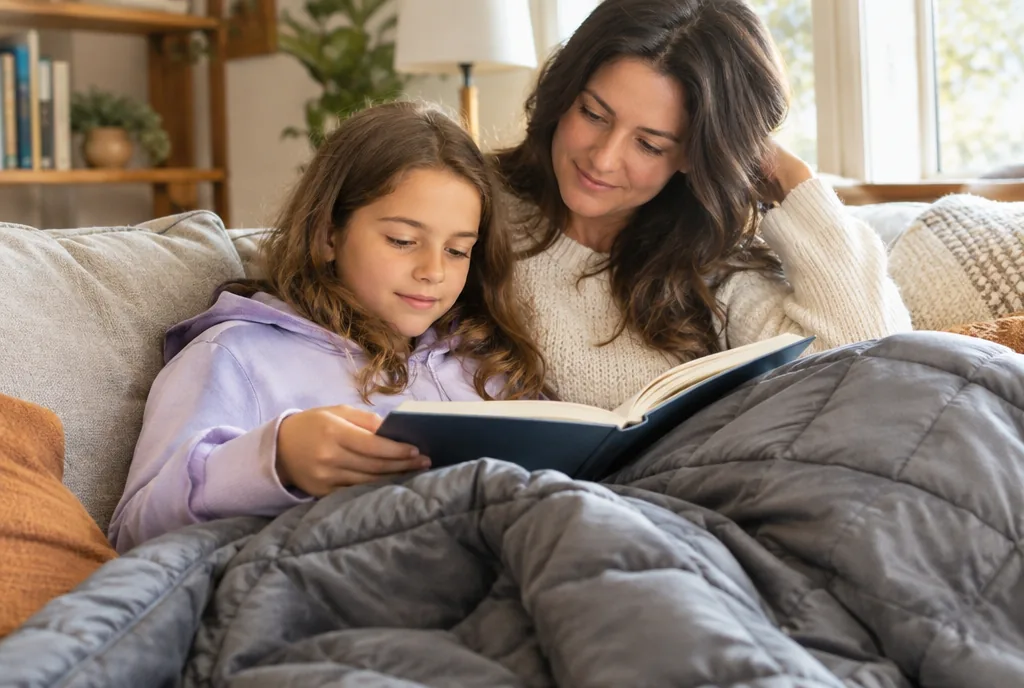
Deep pressure is another option some users choose. Temple Grandin developed her Squeeze Machine in 1965, and her 1992 study reported a calming effect of deep touch pressure in autistic children and adults. A weighted blanket follows the same broad principle, but it is not a casual add-on: it should weigh under 10–15% of the user’s body weight, never cover the face or head, and never be used as restraint.
How to set up a sensory room without overwhelming it
Before buying equipment, start with the room itself, then build in layers. A rectangular space of about 3 by 4 meters or larger is an ideal starting point because wall-mounted equipment is easier to arrange than in a round room. A smaller bedroom corner or school area can still work when the choices are simple and the equipment matches the available supervision.
- Choose the calmest available location. Pick a space where you can reduce interruptions and organize clear zones. Avoid filling every surface; an uncluttered room limits distracting reflections and competing signals.
- Replace harsh lighting first. Where possible, remove fluorescent lighting and use dimmable LED lighting. Warm, amber-toned light in the 2700–3000 Kelvin range is preferred to cool white or fluorescent sources. A dimmer that moves from 0% to 100% gives the user real control over visual input.
- Protect active areas. Where falls or impacts are possible, add soft floor mats and wall padding. Professional room plans use 48-by-48-inch pads for this purpose.
- Create two distinct zones. Set up a quiet area with bean bags, cushions, or a suitable weighted blanket. Keep active stimulation, such as a swing, rocker, therapy ball, or balance equipment, clearly separate.
- Introduce equipment one piece at a time. Begin with one visual item, not a bubble tube, projector, mirror ball, and multiple colors all together. Watch what the user chooses before adding another element.
- Make care part of the plan. After each use, check equipment for safe operation, clean it with detergent-soaked cloths, and keep cords and surfaces orderly.
These sensory room ideas work because they leave room for response. A child might use the quiet zone today and ignore it tomorrow. The room should be flexible enough to accommodate both choices.
Sensory room equipment: choose an input, not a shopping list
Professional sensory room equipment can be impressive, but a useful space does not require it. A 60-inch LED bubble tube with a pump set can cost about $5,500, while a premium complete room package can cost about $9,575 or more. Starting with a few adjustable, lower-cost items allows you to learn what the user actually chooses.
| Input you want to offer | Examples from a practical setup | What to control |
|---|---|---|
| Visual | LED projector, bubble tube, fiber-optic strands or carpet | Brightness, color, and the number of active effects |
| Tactile | Putty, stress ball, puzzles, drawing materials, weighted lap animal | Texture and whether the user wants contact |
| Sound | Speaker with nature sounds, white noise, or pink noise | Volume, distance, and the option for silence |
| Movement and body input | Therapy ball, rocker, swing, or weighted blanket | Equipment risk level, direct supervision, and duration |
On a modest budget, a setup can stay below $500: a dimmer costs about $20–$50, an LED effects projector about $30–$50, and a Bluetooth speaker about $30–$50. Allocate about $50–$100 for pillows and blankets and about $100–$150 for a small fiber-optic carpet. An LED star projector can start around $30. These items create options without turning the room into a visual competition.
Fiber-optic strands are especially useful in a tactile-visual area because they carry light but are electrically unpowered along the strands, making them safe to touch. By contrast, vibration mats, large weighted blankets above 15% of body weight, and some swing or hammock systems are high-risk equipment. Use them only after individual occupational therapy assessment and with direct supervision.
Make light, color, and white noise adjustable
There is no single color that calms every autistic person. Blue, green, and violet LEDs are common in sensory rooms, and some manufacturers describe blue light as calming. The more dependable design choice is adjustability: let the user lower the brightness, turn a color off, or choose no visual effect at all.
Warm, dimmed lighting is often better than cold-white or fluorescent sources. Fluorescent light can flicker at 50–60 Hz and may be uncomfortable for many autistic people. If you are designing a dark studio area for UV or fiber-optic effects, midnight blue or dark green walls can increase the brightness of those effects. Elsewhere, minimize glare from metallic, shiny, or highly reflective surfaces.
Sound needs the same restraint. White and pink noise can mask unwanted environmental noise; nature sounds such as rain, waves, or birds are often preferred over plain white noise. For babies and toddlers, the American Academy of Pediatrics recommends a maximum of 50 dB(A). Keep a sound source at least 200 cm away and keep the level below 50–60 dB(A). In a 2014 AAP study, all 14 tested sleep machines exceeded 50 dB(A) at 30 cm, and three exceeded 85 dB(A). Distance and volume settings are therefore safety choices, not background details.
Use a calm down room proactively, never as punishment
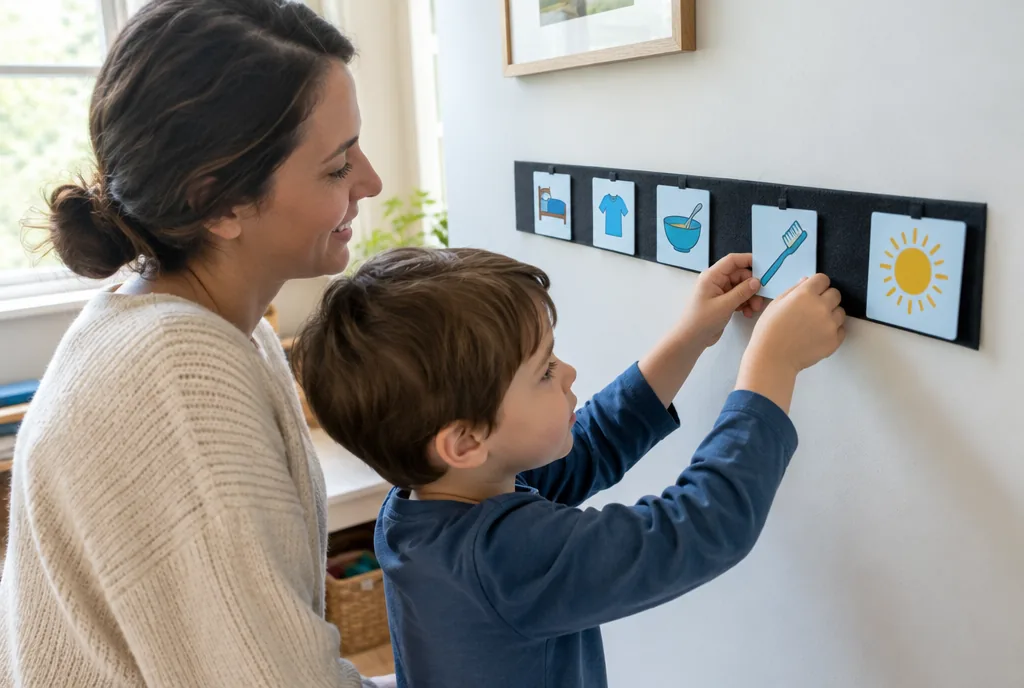
A calm down room is most useful when it is available before a difficult moment rather than assigned afterward. Schools should never use a sensory room as discipline or as a reactive response to problem behavior. Invite the student to use it voluntarily as part of a planned support strategy, then make the next step clear: return to class, move to a scheduled activity, or choose another approved support.
In school, active staff supervision and guidance are needed at all times; students should never be left alone in the room. The door should generally remain open unless drafts, noise, or incoming light interfere with the activity. Each student using the room should have individual learning goals and success criteria recorded in an IEP, with progress documented and evaluated. A typical visit lasts no more than 15 minutes unless a therapist recommends longer.
For each visit, keep a simple record of the student’s name, date, entry and exit time, triggering behavior, earlier interventions, and parent notification. That record distinguishes a purposeful support from an untracked break. It also helps the team see whether the room is being used as intended.
When occupational therapy should guide the plan
An occupational therapist should be involved in assessing sensory needs, selecting equipment, and evaluating a student’s progress in a planned sensory room. This is particularly important before adding equipment with a higher supervision level. The therapist can determine whether an item may be used independently, with indirect supervision, or only with direct supervision.
A sensory room is not automatically an occupational therapy treatment room. Ayres Sensory Integration is a specific, manualized occupational therapy intervention delivered by certified occupational therapists in a specially equipped space. It may include swings, scooter boards, climbing structures, cushions, and large barrels; a room with colored lights and cushions alone is not ASI.
For health concerns, see a doctor. Seek an occupational therapist’s individualized guidance for sensory needs, equipment selection, or a therapeutic plan. A sensory room can support daily participation, but it does not diagnose a condition or replace medical care.
Sensory-room myths that can make a helpful space less useful
Myth: More sensory room equipment always makes a better room
Too many visual elements at once can overwhelm rather than calm. A bubble tube, projector, mirror ball, and several colors running together may compete for attention. Add one element at a time and preserve the user’s ability to turn it down or off.
Myth: Every user needs the same sensory room ideas
Preferences and sensory needs vary from person to person. One person may choose a dim corner and a weighted lap item; another may prefer a therapy ball and no sound. Build a menu of safe options instead of prescribing a single “correct” activity.
Myth: A weighted blanket is harmless in every situation
Weighted blankets under 10–15% of body weight are low-risk only when used appropriately. Never place one over the user’s face or head, and never use one to restrict movement. Larger blankets require occupational therapy assessment and direct supervision.
Myth: Sensory rooms are time-out rooms
Using the room as a disciplinary time-out changes the purpose of the space. A sensory room should be a predictable, voluntary support that meets sensory needs proactively, not a place to send someone after an outburst.
Frequently Asked Questions
What does a sensory room do?
A sensory room provides controlled multisensory input to support sensory needs and help users participate in learning or everyday activities. It works best when the user can choose the type and intensity of input.
Why do autistic people like sensory rooms?
Many autistic people have sensory differences. A room with predictable, adjustable input can offer more control over sound, light, touch, and movement than a busy everyday setting.
What color is calming for autism?
There is no universal calming color. Blue, green, and violet LEDs are common, and some manufacturers describe blue as calming. Warm, dimmable lighting and the ability to change or remove the effect matter more than a fixed color.
What should be in a sensory room?
Choose a small mix of adjustable visual, tactile, sound, and movement options: for example, a projector, putty or a stress ball, a speaker with nature sounds, and safe seating or mats. Match higher-risk equipment to occupational therapy guidance and supervision.
How do you set up a sensory room?
Choose a calm, uncluttered space; replace fluorescent lighting with dimmable warm LEDs; set up separate calm and active zones; pad impact areas; and introduce equipment gradually. In schools, connect use to individual goals, active supervision, and documentation.