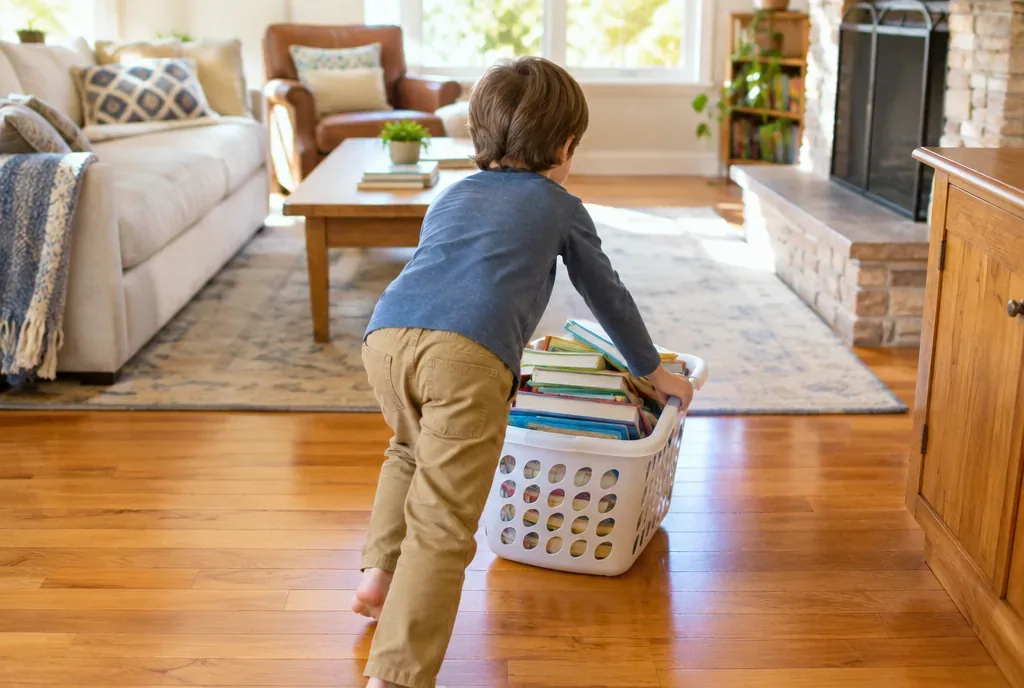
The calming sensory activities that help autistic children most are usually slow, rhythmic movement (rocking or gentle swinging), welcomed deep pressure, heavy work such as pushing or carrying, and a quiet, dim space to retreat to. Which one works depends on your child: one child settles with firm pressure or movement, another needs less sound, less light, and room. Start by noticing what changes your child’s body from tense or scattered to more organized.
Calming sensory activities for autism: start with the input your child accepts
Sensory processing is individual. A child with autism may seek movement and deep pressure yet avoid bright light or a noisy room. On another day or in another place, the same swing or texture may feel overwhelming. Look for a calmer face, slower movements, easier communication, or a return to an activity; those are more useful clues than whether an activity is supposed to be calming.
Slow, rhythmic back-and-forth movement calms through the vestibular system. Try a rocking chair, gentle linear swinging, or sitting on an exercise ball. Spinning works differently: rotating movement tends to be alerting rather than calming. If you have no equipment, animal walks such as elephant stomps and snake slithers combine movement with proprioceptive feedback.
- Offer one kind of sensory input at a time, then observe the response.
- Stop or reduce the activity if your child becomes more restless, distressed, or avoidant.
- Keep a simple note of the time, place, surroundings, and what helped.
Use deep pressure and heavy work for organizing feedback
Deep pressure means the feeling of being firmly hugged, squeezed, stroked, or held. It reaches the body through the proprioceptive sense, which reports from muscles and joints. Light touch on the skin, in contrast, can feel alerting or stressful. In a 2017 study, deep-pressure stimulation brought immediate benefit for most, but not all, autistic participants with severe intellectual disability. So follow your child’s response rather than a preset routine.
Heavy-work activities use large muscles against resistance, which many children find organizing. Build them into daily activities instead of saving them for a crisis.
- Wall push-ups, tug-of-war, or rolling a medicine ball
- Pushing a heavy laundry basket or carrying laundry and groceries
- Trampoline jumping, jumping jacks, or animal walks
- Squeezing stress balls, therapy putty, or dough
- Drinking a thick smoothie through a straw or chewing crunchy foods such as carrots or pretzels
For young children, a firm bear hug, rhythmic playful pats on the back, or a blanket burrito may be options if the child welcomes them. Do not force touch. For weighted blankets, begin at the lower end of the suggested 15–20% of body weight and adjust according to the child’s response. An occupational therapist can help you choose and use weight-based tools appropriately.
Spot overload early, before a meltdown reaches its peak
During sensory overload, a child may have trouble concentrating, become restless, fidget intensely, cover the eyes or ears, grow irritable, try to escape, or struggle to communicate. Hair touching the skin, sound, and bright light can all be triggers. A meltdown is not manipulation. It is an involuntary physical response to emotional or sensory overload.
It helps to think in stages: a calm baseline, agitation, escalation, crisis, and recovery. During agitation, removing or reducing a trigger may still help. Once escalation is underway, requests to explain, reason, or solve the problem can make things harder because language may not be processing well. At that point, a visual card with choices such as headphones, slow breathing, drawing, or sitting alone may work better than spoken directions.
During a meltdown, make safety and recovery the priorities
First, reduce stimulation and make the situation safe. Use few or no words, avoid punishment, and give the child room when it is safe to do so. For some children, rocking, stimming, or jumping can be coping strategies during escalation. Even after the stressor is removed, a meltdown may continue for 20 minutes or longer, and recovery can take substantial time.
Afterward, offer care without demanding an immediate conversation. Depending on the child, rest, food, water, a warm shower, quiet sitting, or a nap may be needed. Only when your child is fully calm is it useful to reconnect and consider what happened. For frequent meltdowns or self-injury, see a doctor to discuss possible co-occurring concerns such as anxiety, sleep problems, or gastrointestinal issues.
Make a calming space small, predictable, and easy to reach
At home or school, a calming space does not need a dedicated room. A beanbag corner, indoor tent, closet, or end of a sofa can work. Its goal is to provide a reliable place where your child can reduce sensory input or choose the input that helps.
| Need to reduce | Practical option |
|---|---|
| Bright or buzzing light | Use dimmable lighting; fluorescent lights can create an audible hum. |
| Visual intensity | Choose soft wall colors or earthy neutrals, with blue, green, or purple accents if welcome. |
| Noise and hard surfaces | Add rugs or other sound-absorbing materials. |
| Need for firm body feedback | Create a crash pad with old pillows and blankets. |
Low-cost sensory tools include textured fabrics, stress balls, a secondhand beanbag, and a glitter bottle made with water, glitter, and glue. The ABC method (antecedent, behavior, consequence) helps you note what happened just before overload and which objects or conditions helped afterward.
Match sensory strategies to your child’s profile, not a label
Sensory-seeking children actively look for movement, pressure, or noise and may seem loud or rough. Sensory-avoiding children become overwhelmed by input quickly and need a quieter, dimmer environment. Many autistic children are both: they may seek deep pressure and movement while avoiding fluorescent light, particular sounds, or smells.
That is why a sensory bin, a swing, or a fidget is not automatically a calming activity. Start with a small trial and observe. An occupational therapist can develop a sensory diet: an individualized plan that tests whether activities are calming, organizing, or alerting. In occupational therapy and sensory integration therapy, your child’s sensory profile and responses should guide that plan.
Bring calming sensory breaks into the school day
Sensory strategies at school work best before distress builds. Depending on the student, a gym-ball chair, wobble stool, standing desk, or a different work position such as the floor with a clipboard or an easel may help. In a noisy classroom, carpets, acoustic materials, and noise-canceling headphones can reduce the load.
Agree with teachers on advance notice for bells, announcements, or fire alarms and a nonverbal signal for “I need a break.” For a student who needs oral proprioceptive input, chewing gum or a pencil-end chew may help. Consistent routines and visual schedules add predictability. In an IEP, sensory tools and breaks can also be written as formal accommodations.
Common myths can keep helpful support out of reach
“A meltdown is the same as a tantrum.”
A meltdown is not goal-directed. It is usually followed by deep exhaustion, not by satisfaction at getting an outcome.
“More sensory input is always better.”
For a child who is already overloaded, more input makes things worse. The useful amount and type of sensory input depend on the child and the moment.
“A weighted item can be worn all day.”
A weighted vest may lose its effect after about 15 minutes because the child gets used to the input. A compression vest, which has no added weight, provides even pressure and may be worn longer than a weighted vest.
Frequently Asked Questions
What sensory activities can help calm an autistic child?
Depending on the child, gentle linear movement, rocking, welcomed firm pressure, heavy work, animal walks, therapy putty, and a quiet sensory space can help. Try one option at a time and watch your child’s response.
How can I prevent sensory overload?
Watch for early signals such as covering ears, fidgeting, irritability, or trouble concentrating. Then track triggers, reduce them during agitation, and offer planned sensory breaks before demanding settings.
How do routines support emotional regulation?
Consistent routines and visual schedules make transitions less surprising. A sensory diet developed with an occupational therapist spreads movement, organizing activities, and calming breaks across the day.
What should I do after my child’s meltdown?
Give your child time to recover before discussing the event. Offer rest, food, water, quiet, or other accepted comfort, then review patterns later when your child is calm.
When should I see a doctor about meltdowns?
See a doctor if meltdowns happen frequently or involve self-injury. A clinician can assess whether concerns such as anxiety, sleep difficulties, or gastrointestinal problems may also need support.