Sensory overload anxiety can happen when everyday sounds, lights, touch, smells, or movement overwhelm a child’s nervous system and leave them distressed, fearful, or unable to cope. Instead of pushing through or assuming misbehavior, notice the pattern, lower the sensory load, and give your child safe, familiar ways to recover.
What sensory overload looks like in kids
Overload does not look the same in every child. One child may cover their ears when a hand dryer starts; another may gag at a food texture, cry during hair washing, or become exhausted after a crowded cafeteria. Look for repeated patterns across places and routines, rather than reading too much into one hard moment.
- Sound and space: covering ears, hiding under furniture, running away, or becoming unusually tired in a busy playground, store, or school cafeteria.
- Touch and taste: distress about clothing tags, sock seams, face washing, toothbrushing, certain fabrics, or particular foods.
- Body signals: bumping into furniture, seeming clumsy, or showing an unusually high or low pain threshold.
- Big protective reactions: irritability, aggression, screaming, going still and silent, or shutting down and becoming unresponsive.
These reactions can reflect fight, flight, or freeze: hitting or kicking, trying to escape, or becoming very quiet and still. They are involuntary nervous-system responses, not a child choosing to make a hard moment harder. Even a small event, such as a shirt tag or an abrupt noise, can be the final input after a demanding day.
How sensory overload anxiety and sensory over-responsivity connect
Sensory over-responsivity (SOR) means reacting faster, more intensely, or for longer than most people to everyday sensations such as noise, light, touch, smell, clothing, or movement. A neutral input to one child can register as threatening to another. When a child repeatedly expects an environment to hurt or overwhelm them, worry and avoidance can grow around it.
In autistic toddlers, SOR predicts the development of anxiety over time, while anxiety alone does not predict the development of SOR. The two overlap and may share biological mechanisms, so it makes sense to address both the sensory load and the child’s worry. Sensory overload is not a diagnosis, and on its own it does not establish autism, ADHD, or an anxiety disorder.
Picture the end of a school lunch period: fluorescent lights, voices, food smells, chairs scraping, and children moving close by. A child who manages each input briefly may still reach a limit when they pile up. Leaving the cafeteria may bring ear-covering, a dash toward a quiet space, then silence. The next day, the child may dread going back, not because lunch is unimportant, but because the setting has become associated with distress.
Find the triggers before the day gets too loud
Triggers are often specific, but they can also accumulate. A noisy classroom, flickering light, strong cleaning smell, and classmates brushing past may be manageable one at a time and overwhelming together. Transitions can add another challenge because the sensory system has not adjusted to the new setting yet.
- Noise: fire alarms, vacuum cleaners, hand dryers, toilet flushing, concerts, and sporting events.
- Visual input: bright or fluorescent lighting, flashing lights, decorated classrooms, crowded stores, and busy gatherings.
- Touch: clothing tags and seams, unexpected touch, hair washing, face washing, and toothbrushing.
- Smell and food texture: mixed textures, cafeteria food, perfumes, and cleaning products.
- Change and proximity: crowded lines, close contact, switching activities, or moving between environments.
Keep a short, practical log for a week: note the setting, the input, the first sign of strain, and what helped. “Hand dryer at swim class; hands over ears; left the room; recovered with earmuffs and a quiet bench” is more useful than “bad afternoon.” A pattern gives you something concrete to adjust: a warning before a transition, a quieter route, preferred clothes, or a planned break.
Know the difference between a meltdown and a tantrum
The outward behavior can be intense in both cases, but the response that helps is different. A tantrum is a controlled, goal-driven behavior: the child wants something or wants to avoid something, and it tends to stop when they get it or realize the strategy will not work. A sensory meltdown is an uncontrolled response to sensory or emotional overload. It continues until the nervous system settles, regardless of the outcome the child wanted.
| What you notice | Tantrum | Sensory meltdown |
|---|---|---|
| What is driving it | A goal, such as getting an item or avoiding a demand | Overload from sensory or emotional input |
| How much control the child has | Goal-directed and likely to stop when it no longer works | Involuntary; the child cannot simply stop |
| Can the child reason in the moment? | Often, especially when limits stay calm and clear | No; reasoning must wait until recovery |
| What helps first | Consistent limits and calm redirection | Safety, less stimulation, and time to regulate |
A seemingly tiny trigger is an important clue. If the reaction follows a sock seam after a loud, crowded morning, the seam may be the last straw rather than the whole story. During a meltdown, protect safety, use fewer words, and avoid trying to teach a lesson before the child has recovered.
Help your child calm down in the moment
In overload, reduce demands before you add strategies. Offer choices without insisting that a child talk, make eye contact, or accept touch. What feels calming is individual, so use supports your child has practiced during calmer times.
- Lower the input. Move to a quieter area when possible, dim lights, turn off screens, and keep your voice brief and calm.
- Offer a voluntary retreat. Invite, rather than send, your child to a familiar calm-down corner. It is a recovery space, never a punishment or time-out.
- Make sound manageable. Noise-reduction earmuffs or noise-canceling headphones can lower the decibel level without fully removing important warnings such as alarms or car horns.
- Give a small choice. “Beanbag or floor pillow?” or “Headphones or quiet corner?” can restore a little control without adding a complicated decision.
- Wait for recovery. When the nervous system settles, reconnect and note what may help next time.
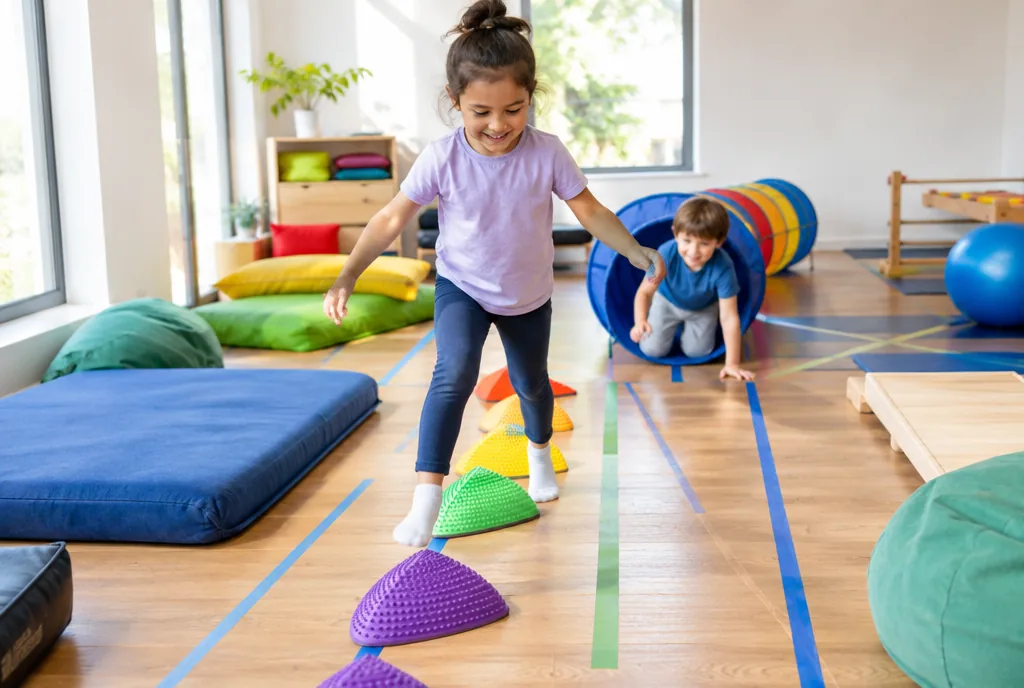
Some children find heavy work organizing: wall pushes, carrying books, or animal walks give proprioceptive input. Slow, rhythmic rocking or slow swinging may be calming, while fast, erratic movement can escalate overload. Firm hugs or other deep pressure should be offered only when the child welcomes them. Sour gum or sour candy can provide useful oral input for some children, but not for every child.
Build a calm-down corner and prevention plan
A calm-down corner works best in a quiet, low-traffic spot that your child can choose to use before they are overwhelmed. Keep it simple; a collection of too many toys or sensations can become more input to manage.
- Beanbag seating or floor pillows
- A dim, controllable light
- A limited number of familiar fidget tools
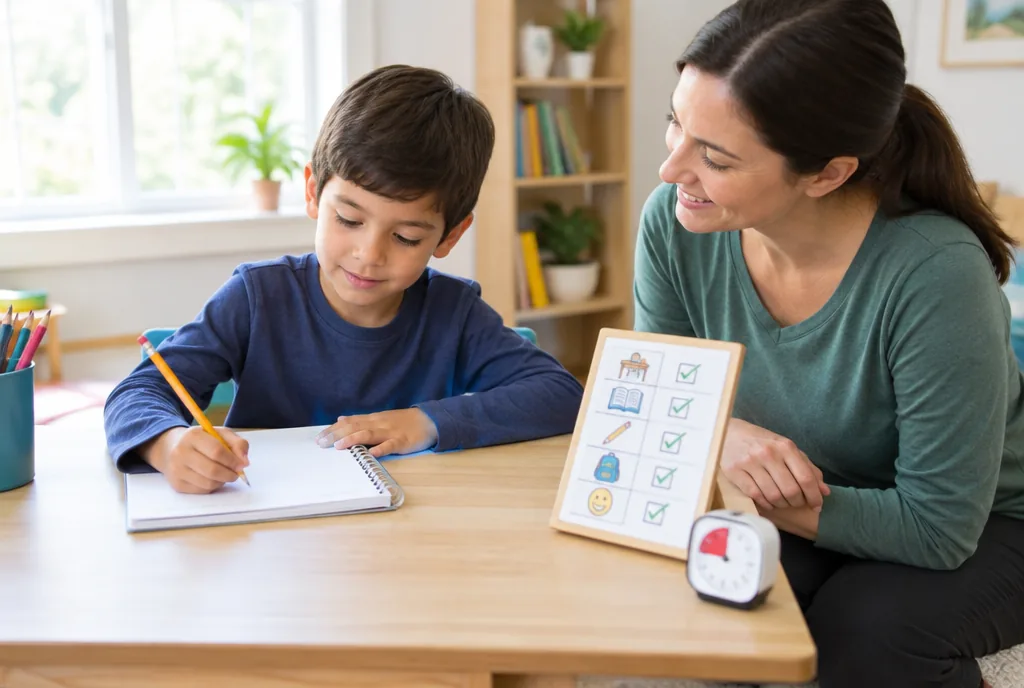
- A visual timer and a visual feelings chart
- Noise-reduction headphones and a weighted lap pad
Teach the routine when your child is calm: notice the early body sign, choose the space, use one tool, and return when ready. At home and school, predictable warnings before transitions, less visual clutter where possible, and regular heavy-work breaks can lower the buildup. Chosen, graded exposure can build tolerance over time when the child controls when a sensation starts and stops. Forcing a child to endure an intolerable sensation raises distress rather than tolerance.
An occupational therapist can create a sensory diet: a schedule of specific sensory activities at regular intervals to meet a child’s needs before overload arrives. That plan should be individualized rather than copied from another child’s routine.
Clear up common misunderstandings
- “This is defiance.” A refusal to enter a cafeteria may be avoidance of an environment that hurts or overwhelms, not avoidance of lunch itself.
- “Headphones fix the problem.” Headphones are an accommodation for sound; they do not remove every trigger or replace a broader support plan.
- “Overload proves autism or ADHD.” Sensory differences are common in autism and can co-occur with ADHD, but overload alone does not establish either condition.
- “The reactions are contradictory.” A child can be oversensitive to sound yet seek other sensations or have difficulty registering pain or hunger. A mixed profile is possible.
The useful question is not “Why can’t they handle this?” but “What input is their body trying to escape, seek, or organize right now?” That reframe makes room for practical changes instead of blame.
When to call a doctor or ask for occupational therapy
See a pediatrician or ask about occupational therapy when sensory reactions frequently lead to distress or meltdowns, or when they limit learning, social participation, family activities, or everyday routines. Professional help is especially important if your child cannot attend school, eat a variety of foods, get dressed without a major meltdown, or sleep through the night because of sensory difficulties.
An occupational therapist evaluates sensory concerns through standardized tests, direct observation, and caregiver interviews, then develops individualized strategies that can carry into home and school. Sensory integration therapy can include movement activities, resistive body work, and sometimes brushing. The American Academy of Pediatrics advises using sensory integration therapy with a clear plan and measurable goals, and families should know that the evidence base is limited. A pediatrician, OT, psychologist, or speech therapist may work together when sensory concerns occur alongside autism, ADHD, or developmental delays.
Frequently Asked Questions
What does sensory overload look like in kids?
It may look like ear-covering, hiding, irritability, aggression, running away, shutdown, distress with clothing or grooming, gagging with certain foods, or fatigue in busy environments. The key is a repeated pattern tied to sensory input or demanding settings.
Can anxiety cause sensory overload?
Anxiety and sensory over-responsivity often overlap and are closely linked. In autistic toddlers, research found that SOR predicted later anxiety, while anxiety alone did not predict later SOR. Address both the child’s worry and the sensory conditions that are hard for them.
What triggers sensory overload?
Common triggers include sudden loud noise, bright or flickering lights, visual clutter, touch from clothing or grooming, strong smells, food textures, crowded spaces, and transitions. Several manageable inputs can combine into overload.
How do you calm sensory overload?
First reduce input and demands. Offer a voluntary quiet space, noise reduction, and a few familiar choices. Some children respond well to slow movement, heavy work, or welcomed deep pressure; avoid forcing a sensation or strategy that the child resists.
When should you seek help?
Talk with a pediatrician or occupational therapist when reactions repeatedly disrupt school, eating, dressing, sleep, relationships, or participation in daily activities. An evaluation can help identify patterns and build a support plan around them.