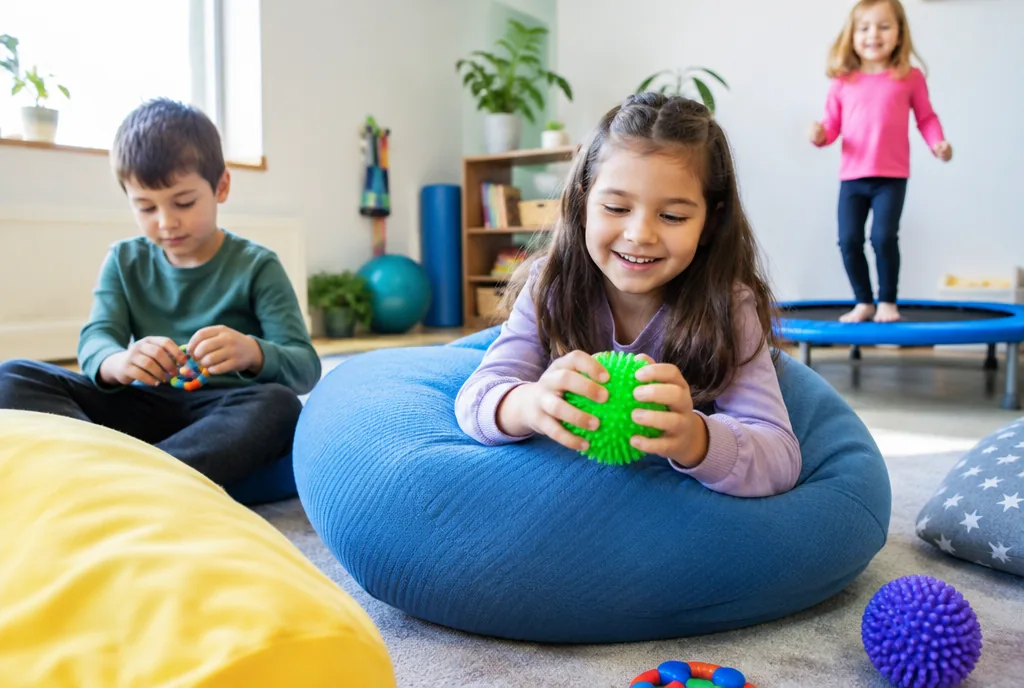
A sensory diet for kids is not a food diet. It is an individualized schedule of sensory activities, spaced through the day, that gives a child the input they need to feel more settled, alert, or ready for the next task. The useful question is not “What activity is best?” but “What happens just before this hard moment, and what kind of input helps this child get to a just-right state?”
What Is a Sensory Diet—and What Is It Not?
Occupational therapist Patricia Wilbarger coined the term “sensory diet” in 1984. The idea comes from sensory integration and sensory processing theory: planned sensory experiences can support regulation in an environment that otherwise feels overwhelming or under-stimulating.
Unlike a food diet, this is not a menu and it is not a generic checklist. A child’s sensory diet is a practical plan for timing, type, duration, and intensity of activities at home, school, and in the community. The goal is a “just-right” level of arousal—neither overloaded nor under-alert.
Because the same activity can organize one child and over-arouse another, the American Occupational Therapy Association advises using sensory interventions only after documented assessment. An occupational therapist can use a structured sensory profile to identify a child’s sensory needs and shape a plan. See a doctor or qualified clinician if you have developmental concerns, sudden changes in behavior, or questions about a child’s health.
Notice Patterns Before You Choose an Activity
Sensory seeking is a pattern, not a diagnosis. Dunn’s model describes four patterns: sensory seeking, sensory avoiding, sensory sensitivity, and low registration. Every child can show parts of all four, and the balance can change by setting and sensory system.
For example, a child may crash into furniture after school yet refuse hair washing at night. That is not necessarily a contradiction: one moment may involve a need for movement or proprioceptive input, while the other involves unwanted tactile input. A short sensory diary makes these patterns easier to see. Note the time, what happened before, the behavior, the activity you tried, and what happened next.
Sensory seeking alone does not mean ADHD or autism. Children with ADHD may have higher scores across all four sensory patterns, but the sensory experience itself is the goal for a seeker, not simply motor restlessness. Unusual sensory interests can be one autism feature, but they are not enough for an autism diagnosis.
Sensory Diet Examples That Match Different Systems
Start with a small selection rather than trying every type of sensory input at once. Watch the response: calmer, more organized behavior suggests a useful match; rising agitation means it is time to stop and discuss the result with the occupational therapist.
- Proprioceptive input: wall push-ups, bear walks, crab walks, carrying a heavy item, or pushing and pulling a cart provide “heavy work” through muscles and joints.
- Vestibular input: swinging, trampoline jumping, log rolls, hanging from playground equipment, or a headstand stimulate the inner-ear balance system.
- Tactile input: a bin of rice, beans, or sand with hidden toys, play dough, finger painting, and water play offer hands-on exploration.
- Oral input: chewing gum, crunchy snacks such as carrots, apples, pretzels, or popcorn, and chewy foods give input through the jaw.
- Sound and sight: calming instrumental music, nature sounds, or white noise may be regulating; sunglasses outdoors, softer lighting, and visual timers can reduce visual strain.
Keep activities concrete: “two minutes of wall push-ups” is more useful than “burn energy.”
Build a Sensory Diet Template Around Real Transitions
You can create a sensory diet template with four steps. First, collect observations in the diary. Second, ask what the child may be seeking or avoiding. Third, schedule an observable strategy before the predictable hard point. Fourth, monitor the response and adjust rather than adding more input automatically.
| Time or transition | Activity to try | What to observe |
|---|---|---|
| Morning | Ten minutes of heavy work: carry a backpack or push a heavy basket | Whether the child becomes more ready to start the day |
| Between classes | A fidget, gum, or a crunchy snack as a sensory break | Whether the break supports the next class task |
| Before lunch | Five to ten minutes of swinging or trampoline movement | Whether movement helps the child reset |
| Before homework | Warm bath, stretching, or light deep pressure with a weighted blanket | Whether settling is easier |
| Bedtime | One minute rolled in a blanket, then two minutes of gentle massage after a bath | Whether the routine feels calming rather than stimulating |
Visual daily cards can make the plan easier to follow and prepare a child for transitions. A routine with 15-minute blocks, plus regular anchors for mornings, meals, and bedtime, can help make the schedule predictable.
Use School Activities That Fit the Classroom
School sensory diet activities work best when they blend into the day instead of marking a child as different. Before a demanding task, two minutes of wall push-ups or chair push-ups can provide quick proprioceptive input without leaving the room. Carrying books between rooms adds natural heavy work.
For a child who seeks movement during breaks, a clearly marked crash pad—a soft gym mat, beanbag, or pile of cushions—with the rule “feet land on the mat” gives a defined target. Coordinate any plan with the school and the child’s occupational therapist.
Be cautious with popular tools. Studies have not shown significant attention improvement from wobble cushions or exercise balls; they may be tolerance tools rather than treatment. In one study of 60 children with ADHD, fidget spinners worsened attention while in use. The object is not automatically the intervention; the child’s response matters.
Food Can Offer Sensory Input, Not a Universal Fix
When parents ask what foods are good for kids with sensory issues, there is no single answer. A child who is under-responsive or seeking may prefer crunchy, hard, spicy, or cold foods because they provide stronger feedback. A child who is sensitive or avoiding may prefer soft, mild, consistent foods without strong flavors or surprise textures.
Chewy foods such as dried fruit, chewy candy, or tough bread can provide proprioceptive input through the jaw. Cold foods, chilled fruit juice, and fresh tart juices can be alerting before a task that requires wakefulness. Food chaining offers a gradual path from a preferred food to a similar new option—for example, from a familiar cracker to a different cracker and then a whole-grain version.
Three Myths That Can Make a Plan Less Helpful
- “More input is always better.” It is not. Wrong timing or intensity can make a child more dysregulated.
- “A sensory diet replaces treatment.” Sensory strategies may be part of a broader plan; they do not replace ADHD medication or behavioral therapy.
- “One plan lasts forever.” Sleep, growth, teething, health, and new environments can change a child’s sensory response, so plans need regular adjustment.
Use strategies before a known challenge—before homework or a dental visit—rather than waiting for a meltdown. Families often notice better self-regulation after two to four weeks of consistent use, while fuller effects can build over months. Active multisensory activities totaling at least 90 minutes a week have been associated with improved occupational performance.
Frequently Asked Questions
How often should kids do sensory diet activities?
A sensory diet is distributed across the day at school, home, and in the community—not limited to one daily session. The exact frequency and dose should be individualized with an occupational therapist.
How long does a sensory diet take to work?
Many families notice changes in self-regulation after two to four weeks of consistent implementation. Full effects can take several months, and the plan may need adjustment along the way.
Does sensory seeking mean ADHD or autism?
No. Sensory seeking is not a diagnosis and, by itself, does not establish ADHD or autism. Discuss wider developmental or behavioral concerns with a doctor or qualified clinician.
Can kids grow out of sensory seeking?
Seeking scores decreased with age in a study of children ages 3 to 14, including autistic children, children with ADHD, and typically developing children. Supportive strategies may still be useful into the teen years and adulthood.
What are simple sensory diet activities for school?
Two minutes of wall or chair push-ups, carrying books, a planned sensory break with gum or a crunchy snack, and a defined crash-pad option are concrete examples to discuss with the school team and an occupational therapist.